

10 Ways AI Can Inspire Your Writing Without Doing It For You
Using the powerful innovation of AI to help you write without being a cheater.

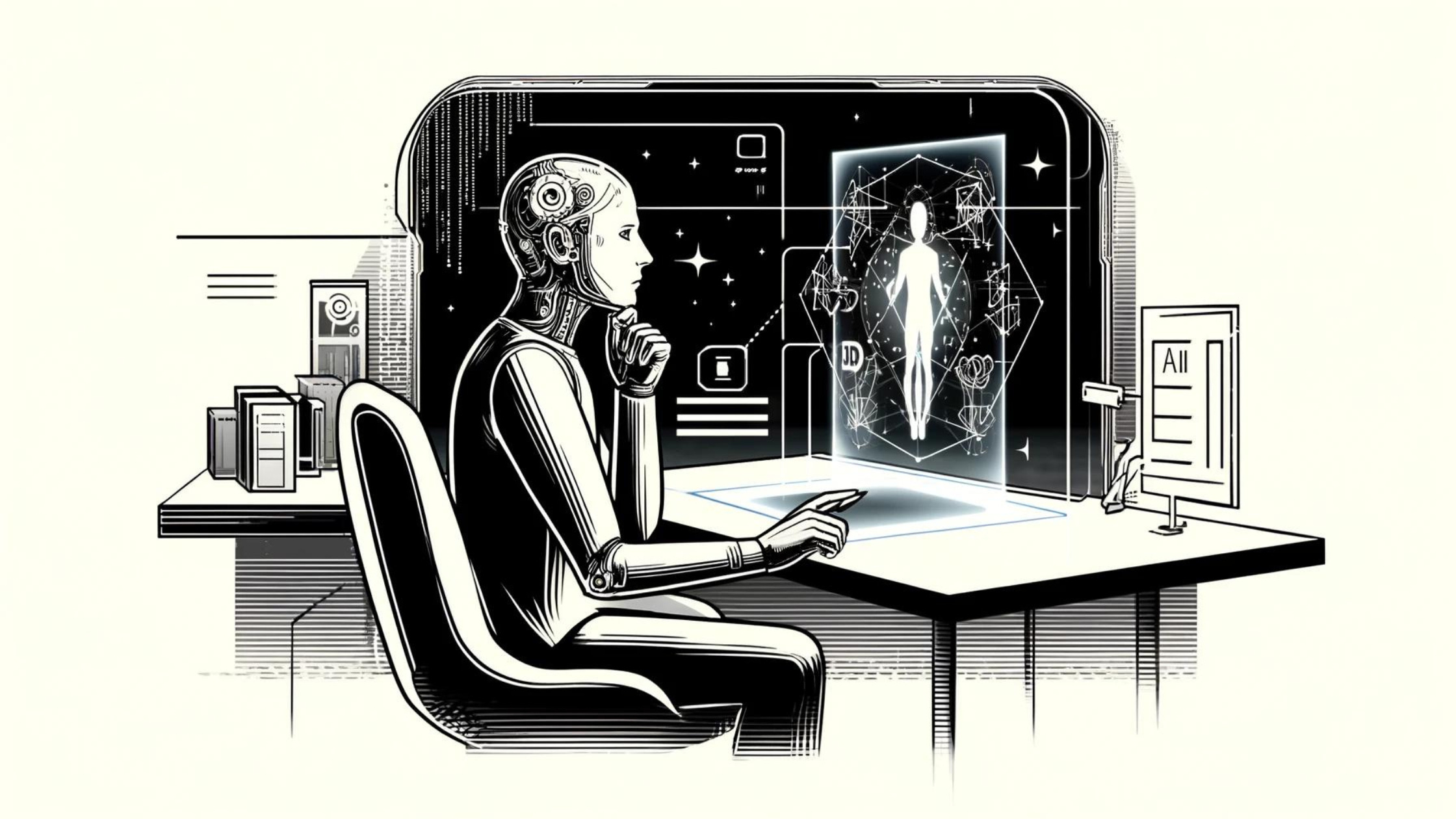
The thing nobody wants to say about AI is that it’s a symbiote, not a replacement.
You feed it. It feeds you. But if you let it do all the eating, you starve.
I’ve been watching this play out for months now---the true believers treating AI like a digital messiah, the purists acting like touching the keyboard after an AI prompt makes you a fraud, and everyone in between trying to figure out what the fuck we’re actually supposed to do with this thing.
AI is a power tool. You can build a house with it or you can cut your hand off.
The tool doesn’t care.
The machine learns. You don’t.
That’s the trap. You ask it to write something, it writes something, you copy-paste that something, and congratulations---you just outsourced the only part of writing that matters. The thinking. The struggle. The moment when your brain makes a connection nobody else has made and suddenly you understand something you didn’t understand five minutes ago.
That’s gone. You traded it for convenience. You traded learning for output.
And yeah, if you lose your job to AI, it’s one of two things: you weren’t very good at what you did, or your boss is a cheap bastard who thinks humans and algorithms are interchangeable.
Either way, fuck ‘em. If you’ve got the talent, you don’t need their table scraps.
But the tool becomes something more than a glorified autocomplete with experience.
Use it like a research assistant who never sleeps. Outline what you’re writing about and let it pull sources, studies, recent developments. You still verify everything---AI hallucinates like a motherfucker---but it’s faster than digging through Google Scholar at 2 AM trying to remember if that study you vaguely recall actually exists.
Use it to stress-test your arguments. Feed it your thesis and tell it to play Devil’s Advocate. Let it find the holes you’re too close to see. Then you fix those holes yourself. You’re not outsourcing the thinking---you’re pressure-testing it.
Use it to generate headlines and then throw most of them away. AI can spit out fifty variations in thirty seconds. Forty-nine of them will be garbage. One might be useful. That’s still faster than staring at a blank screen trying to come up with something that doesn’t sound like every other clickbait headline on the internet.
Use it to check your tone. You’re writing for an audience you think you understand, but do you? Feed it a paragraph and ask if it reads formal or conversational, technical or accessible. It’ll tell you. You decide if it’s right.
Use it to summarize what you just wrote. Not because you don’t know what you wrote, but because seeing your 3,000-word essay condensed into three sentences sometimes reveals that you buried the lead on page four and need to restructure the whole damn thing.
The machine learns. You don’t.
That’s still true. But if you’re using it as a sparring partner instead of a ghostwriter, you learn through it. You learn what questions to ask. You learn what sources are bullshit. You learn how your argument holds up under pressure. You learn how to edit something that’s 80% there into something that’s actually worth reading.
The people who hate AI think it’s corrupting the purity of the craft, like writing was ever pure. Writing has always been messy. It’s always been about stealing from everyone who came before you and remixing it into something new. AI is just another thing to steal from.
The people who love AI think it’s going to democratize creativity, like everyone having access to a tool means everyone will use it well. But a chainsaw doesn’t make you a carpenter. It just makes you someone with a chainsaw.
What matters is this: did you do the thinking, or did the machine?
Did you wrestle with the idea until you understood it, or did you let the algorithm spit out something that sounds smart and call it done?
Did you learn something by making this, or did you just produce content?
The machine learns. You don’t.
Unless you make it your assistant instead of your replacement.
Three things to remember if you’re going to use this tool without losing your soul:
Never copy-paste raw AI output. Edit it. Rewrite it. Make it yours. If you can’t explain why you made every choice in that final draft, you didn’t write it---you just supervised a robot.
Verify every source. AI lies with confidence. It will cite studies that don’t exist, quote experts who never said that, and link to articles that vanished into the void. Trust nothing until you’ve checked it yourself.
Remember what you’re optimizing for. If it’s speed, you’ll get fast garbage. If it’s learning, you’ll get slow mastery. The tool can’t decide that for you.
I think AI is incredible.
I also think it’s dangerous as hell. Not because it’s going to become Skynet---because people are going to forget how to think and call that progress.
Use the tool. Don’t let the tool use you.
And if you disagree, I’d genuinely love to hear why. I could be wrong about this.