

Mystery Meats
Don't just survive the Apocalypse. Thrive in the apocalypse.

Cue Theme Song:
This is it, folks. The final issue. Time for SHTF.
Well, the final full issue of the year. I’ll likely send a short New Year’s post out later this week.
This week I wanted to explore the end. Specifically, what you can do living through an apocalypse (little A, not an extinction event) that basically breaks the current modern world.
I like this topic because it’s just an interesting thought exercise. There’s a level of excitement to having to survive in situations where the rules tend to go out the window and you have to become a hunter/gatherer again.
We’ll explore:
Apartment Complex survival in the collapse.
An MRE Gourmet Recipe
How I’m Pretty Sure the LHC created the Mandela Effect
Happy New Year. Have some strange.

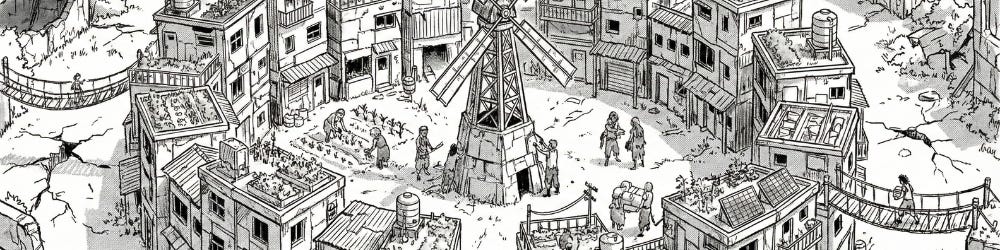
APARTMENT COMPLEX SURVIVAL IN THE COLLAPSE
Or: How to Turn Your Garden-Style Prison Into a Walled Village Without Looking Like a Prepper Psycho
The chain-link fence is a lie.
You look at it every day when you pull into the parking lot of your garden-style apartment complex and you think it means something—some kind of boundary, some kind of protection.
It doesn’t.
It’s decorative steel, designed to keep the insurance company happy and the dogs from shitting on the neighbor’s lawn, if that.
When the collapse comes—economic, infrastructure, pandemic, pick your poison—that fence becomes less useful than the decorative rocks arranged around the mailboxes.
But here’s what you do have: dirt. Actual goddamn dirt.
And multiple buildings spread over two or three acres like a medieval village that forgot it was supposed to be fortified. You’re not stacked in a concrete tower where the elevator shaft becomes a vertical coffin and the stairwell smells like desperation and human waste by Week Two.
You’ve got space.
Distance between units.
Room to breathe and grow and defend.
You’re living in a modern walled village. You just don’t know it yet.
I spent twelve years thinking about perimeters and chokepoints and how to turn civilian infrastructure into defensible positions. Not because I wanted to. Because that was the job.
And I’m telling you right now: your garden-style apartment complex—the one with the sad pool and the tennis court nobody uses and the maintenance shed full of rusty tools—that place can thrive when everything else is eating itself alive.
But only if you stop thinking like a tenant and start thinking like a settler.
THE PERIMETER: SHRINK IT OR LOSE IT
You cannot defend two acres of chain-link with six neighbors and a baseball bat.
Let that sink in. You cannot do it. The math doesn’t math.
The human body needs sleep. Exhaustion kills faster than bullets. So you do what every successful defensive force in history has done: you shrink your perimeter to something you can actually hold.
The Wall of Cars:
Week One—maybe Day Three if you’re smart—you organize a team and you start pushing cars.
All those sedans and SUVs in the parking lot that will be useless without gas? They become your wall. You push them to the main driveways, the chokepoints where vehicles enter the complex.
You create a solid barrier of Detroit steel and Korean engineering. You leave one gap, and you guard it twenty-four hours a day in rotating shifts.
This is gray-man tactics. You’re not building a compound. You’re not flying a Gadsden flag or painting “LOOTERS WILL BE SHOT” on plywood.
You’re just... rearranging the parking lot.
Nobody driving by can tell if you’re thriving or if the complex is abandoned. Good. Let them think it’s abandoned.
The Green Zone:
If your complex has ten buildings, you probably can’t hold them all.
Consolidate. Move everyone into the inner six buildings—the ones with the best sightlines and closest proximity to the water source.
The outer four buildings? Strip them. Pull the copper from the walls. Take the doors. Salvage the insulation.
Use them as buffer zones. As watchtowers. As places you can see coming.
You stop being an apartment complex. You become a campus.
Sightlines:
Cut down the hedges. I know. They were pretty.
They gave you privacy from the neighbors you never talked to anyway. Fuck the hedges.
You need 360-degree visibility from the second-floor windows of your perimeter buildings. Hedges are where bad things hide. Clear them.
AGRICULTURE: THE GREAT TURF WAR
Lawns are calorie vacuums.
They suck water and fertilizer and human labor and give you back nothing except the suburban fantasy that you’re not one missed paycheck from disaster.
When the systems fail, grass becomes the enemy. You rip it up. You till it. You plant potatoes and sweet potatoes in every square foot of dirt between buildings.
Why potatoes? High calorie. Low maintenance. Vodka.
They grow underground so they’re harder for desperate people to steal at night. Sweet potatoes give you vitamin A so your kids don’t go blind from malnutrition.
This isn’t a hobby garden. This is industrial agriculture on a two-acre scale.
The Pool:
Every garden complex has a pool. Do not drain it. That’s twenty thousand gallons of water sitting there like a gift from the infrastructure gods. You cover it with tarps to reduce evaporation and algae growth.
It’s not drinking water—Christ, don’t drink it—but it’s gray water for washing clothes, flushing toilets, keeping hygiene levels high enough that dysentery doesn’t wipe out half your population by month three.
Thriving means not shitting yourself to death.
Chicken Runs:
Chickens are the ideal livestock for this density. They turn food scraps into eggs—protein—and manure—fertilizer.
You take the fencing from the tennis court or the dog park area and you build a secure coop. Chickens are loud and stupid and they will save your life.
SPECIALIZATION: THE GUILD SYSTEM
You have separate buildings. Use them.
Building A (The Hospital/Quarantine):
Designate one building—preferably the most isolated—for the sick. Someone has a fever? They move there. You do not fuck around with contagion in close quarters. This protects your healthy workforce. You can’t farm or defend or cook if you’re all lying in your own fluids hallucinating about the world before.
Building B (The Nursery/School):
All children and elderly caregivers move to one secure building. This pools childcare. Frees up able-bodied adults for heavy labor. Thriving means protecting the future, even when the present looks like a Cormac McCarthy novel where nobody remembered to bring punctuation.
The Workshop (Maintenance Shed):
Every complex has a maintenance shed. Tools. Pipes. Solvents. PVC and duct tape and things you didn’t know you needed until the hardware store is a burned-out shell. You inventory this immediately. The maintenance guy—the one who fixed your toilet that one time—he’s now one of the most important people in your community.
Treat him like it.
ENERGY & SANITATION: THE UNGLAMOROUS SURVIVAL
If the sewer pumps fail, the ground-floor units back up first. Sewage in your living room. It’s not theoretical. It’s gravity and plumbing and the collapse of municipal infrastructure.
You dig latrines at the far edge of the property. Downhill. You build composting toilets—buckets with sawdust—and after a year of composting you use the humanure for ornamental plants, keeping the safe fertilizer for food.
This is not sexy. Nobody writes epic survival fiction about proper sanitation. But dysentery will kill you faster than raiders.
Cooking Hubs:
Do not let people cook in their apartments. Fire risk. Wasted fuel. You build a communal outdoor kitchen using bricks or pavers from the landscaping. One big fire cooks for fifty people more efficiently than fifty small fires. You save fuel. You build community. You stop people from burning down the only shelter you have left.
GOVERNANCE: THE COUNCIL
Tribalism happens fast. Building One thinks Building Two is lazy. Building Two thinks Building Three is hoarding toilet paper. You need structure before the accusations turn into violence.
Form a council. One representative from each building. All inventory—food, medicine, ammunition—is logged and visible. Transparency. If people think the leadership is hoarding, the community collapses from the inside. You don’t need raiders. You’ll eat yourselves.
Work for Food:
To thrive, there are no free rides. Shifts are assigned. Four hours of guard duty. Four hours of farming. Four hours of rest. Everyone works. Everyone eats. You’re not building socialism or libertarian paradise. You’re building a system that doesn’t collapse when one person decides their back hurts.
THE FIRST YEAR TIMELINE
Q1: Fortification. Block the driveways with cars. Consolidate residents into inner buildings. Inventory the maintenance shed before someone steals all the copper to trade for cigarettes.
Q2: Agriculture. Rip up the lawns. Build chicken coops. Set up rainwater barrels on every downspout.
Q3: Hygiene. Dig latrines. Secure the pool as gray-water cistern. Establish quarantine protocols before disease does it for you.
Q4: Trade and expansion. Establish a trade gate. Scout nearby commercial zones for solar panels or seeds or anything useful that isn’t nailed down.
The collapse isn’t Mad Max.
It’s slower. Quieter. More bureaucratic in its cruelty.
But your garden-style apartment complex—with its dirt and its distance and its defensible buildings—can become the thing that people a hundred miles away hear about and think, “Maybe we should head there.”
Or it becomes a tomb.
The difference is what you do in the first thirty days.
The fence is still a lie. But the dirt is real. And real dirt grows real food. And real food keeps real people alive long enough to remember why survival was worth the effort.
You’re already living in a fortress. You just have to see it.
3 Cool Things:

🌶️ GOURMET VET: THE CHILI MAC REDEMPTION
The Chili Mac MRE is a lie that almost tells the truth.
It comes in a brown plastic pouch and it tastes like what I imagine prison food would taste like if prisons gave a shit about morale. Which is to say: it’s edible. Barely. The pasta has the texture of something that died and was reconstituted through chemical warfare. The chili sauce tastes like ketchup’s depressed cousin. But here’s the thing—it has potential.
You just need to trade.
The Play:
Find someone who got the Jalapeño Cheese Spread in their MRE. This is key. The Jalapeño Cheese is thick, nuclear-orange, and tastes like what would happen if Velveeta and a poblano pepper had a baby in a government lab. It’s beautiful. Offer them your pound cake or your candy for it. They’ll take the deal because pound cake is edible without modification and the Jalapeño Cheese requires work.
Their loss. Your gain.
The Build:
Heat the Chili Mac pouch in boiling water or using the MRE heater. Don’t eat it straight from the bag like an animal.
Open the bag. Add the entire Jalapeño Cheese Spread pouch. Stir it in with the little plastic spoon they give you that will break halfway through the meal.
Crush the big soft cracker—the one that comes in every MRE and tastes like compressed flour and broken dreams—into chunks. Drop them into the Chili Mac. They’ll absorb the sauce. They’ll add texture. They’ll make you feel like you’re eating something that required thought.
Season to taste. If you’re smart, you brought: garlic powder, red pepper flakes, and a small bottle of Tabasco. Add them. This is the difference between “eating to survive” and “eating to remember you’re still human.”
The Result:
You now have something that resembles Tex-Mex struggle food.
It’s not good. But it’s not bad. It’s the kind of meal that makes you think, “I’ve had worse at a chain restaurant and paid fifteen dollars for it.”
And in the field—or the collapse—that’s goddamn gourmet.

🕳 RABBIT HOLE: HOW I’M PRETTY SURE THE LHC CREATED THE MANDELA EFFECT
They found the Higgs Boson in 2012 and reality got weird.
I don’t mean weird like “quantum mechanics is spooky” weird.
I mean weird like “half the planet remembers the Berenstain Bears being spelled Berenstein” weird.
Like “people swear Nelson Mandela died in prison in the 1980s even though he clearly didn’t” weird.
Like consensus reality started fraying at the edges and nobody wanted to admit it because admitting it means something very uncomfortable about the nature of existence.
What the LHC Actually Does:
The Large Hadron Collider smashes particles together at near-light speed to study the fundamental building blocks of reality.
They’re not just looking at particles. They’re creating conditions that haven’t existed since the first microseconds after the Big Bang. They’re fucking with the fabric of spacetime at the Planck scale.
And when they found the Higgs Boson—the so-called “God Particle” that gives matter mass—they proved that the universe operates on principles we barely understand.
What if they didn’t just observe reality?
What if they nudged it?
The Multiverse Isn’t a Metaphor:
Quantum mechanics already suggests that every decision, every observation, every particle interaction creates branching timelines. The Many-Worlds Interpretation isn’t fringe anymore.
It’s respectable physics.
And if that’s true—if parallel universes exist in quantum superposition—then what happens when you slam particles together with enough energy to recreate the conditions of the universe’s birth?
You create interference patterns. You collapse wave functions on a massive scale.
You blur the boundaries between adjacent timelines.
The Mandela Effect as Quantum Bleed:
The Mandela Effect isn’t faulty memory. Faulty memory doesn’t produce identical “misrememberings” across millions of people who never communicated. It doesn’t explain why entire populations remember the same wrong details with the same certainty. Berenstein. Mandela dying in the ‘80s. “Luke, I am your father” instead of “No, I am your father.”
These aren’t glitches in human recall. They’re artifacts. Echoes from timelines that got too close to ours when the LHC started operating at full power.
We’re not remembering wrong. We’re remembering right—for a timeline that no longer cleanly exists.
Why 2012?
The Higgs Boson was confirmed in July 2012. The Mandela Effect exploded into public consciousness around the same time. Correlation isn’t causation, except when it is. The LHC didn’t just discover the God Particle. It rang a bell that resonated across the multiverse. And now we’re living in a reality that’s stitched together from pieces of adjacent timelines that got too close and merged.
The Uncomfortable Conclusion:
You remember Berenstein Bears because in your original timeline, that’s how it was spelled. You remember Mandela dying in prison because in your original timeline, he did. The LHC didn’t change the past. It changed which version of the past you’re currently experiencing.
And if that’s true—if reality is that unstable, that malleable, that dependent on which timeline you happen to be riding—then what else have they changed without telling us?
The universe is less solid than we pretend. And we’ve been pretending really hard.
Just my opinion, though. None of that is from a scientist at all. I stayed at Holiday Inn before.
📰 Articles I Enjoyed This Week:
I loved this list from Punk N' Coffee.
This is a great fiction writing lesson from Rebecca Makkai.
📚 CURRENTLY CONSUMING
Watching: Talent show videos on YouTube. Hate all ya want.
🧠 ON MY MIND

Happy New Year. See ya next year,
~ Joe
Yes, do or die filters out the dedicated from the managers and supervisors.
Culture has been stuck for a long time now. Maybe that's another effect of Higgs-Boson. A time loop that has kept culture in either stagnation or decline.
Solid post. I imagine the socialists will reveal themselves when the issue of shared responsibilities and having to contribute comes up.
I do remember the Fruit of the Loom underwear having a cornucopia that now never existed. I've had the pet theory that it was a momentary intersecting of timelines. But before Higgs-Boson happened there must be an unrevealed or undiscovered event in the early 1980s that sent us from the fashions of the 1970s into the weird fashion sense that dominated that decade.