Everything Is Theft, Including Your Original Idea
/Originality is a clean word for influences whose fingerprints got wiped. Pick your thieves on purpose and the work starts sounding like somebody real.
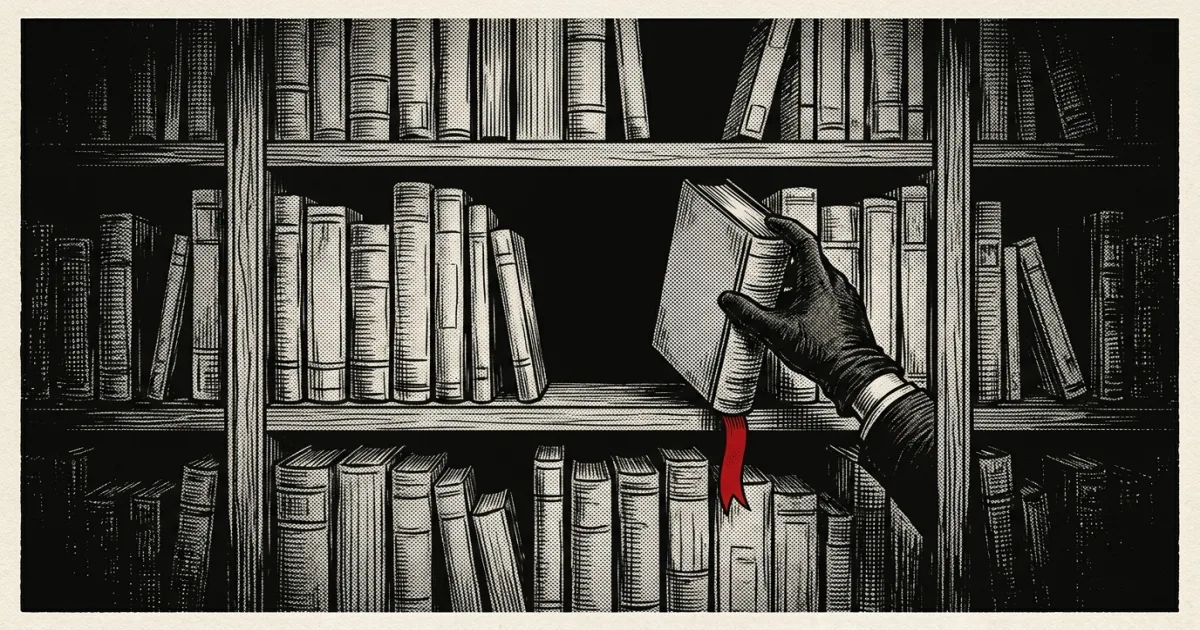
TL;DR: Austin Kleon’s Steal Like an Artist makes the case that creative work grows out of influences you choose on purpose. The bill arrives later, when you have to name yours out loud and admit which ones you couldn’t carry.
Every original idea has a fake mustache and somebody else’s wallet.
Writers say “influenced” because “stolen” makes the room look around for security. It’s a polite bullshit we all signed off on before any of us got here.
The work doesn’t care which word saves our dignity. It came in through books, records, films, jobs, disasters, teachers, enemies, overheard speech, and old machinery we pulled apart in the shop after everybody else clocked out and went home to their families.
Austin Kleon built Steal Like an Artist around the relief of admitting that lineage. Pick the people worth learning from, study what they studied, then follow the family tree backward until your influences quit looking like a mood board and start looking like an education.
I run this whole thing out of Tennessee by myself, on old military habits and too many domains, and about half of what I know how to do got lifted clean off strangers who never saw a nickel of it. Bukowski taught me flat. The freight business is where I learned that a promise is a weight somebody has to carry across water.
I can’t leave this one alone because the catalog I’m building is a theft record with my name on the cover, and every entry on it is somebody I picked on purpose.
Nobody audits that list but me.
The difference between a costume and a crowbar
Sunglasses, profanity, chemical weather: the weak thief takes Thompson’s wardrobe and figures the wardrobe was doing the work. A useful thief studies how Thompson collapsed reporter and subject into one body, turned his own failures into plot, and ran the velocity high enough to hide sentence work he did slow and alone in a room with the door shut.
One of those gets you a costume. The other gets you a crowbar you can carry into any building for the rest of your life. The same holds outside prose.
You can copy a product’s colors, or you can study how it kills a hard decision for somebody at eleven at night. You can imitate a guitar tone, or learn how a chorus holds the release back one bar past comfortable. Deep theft asks what the thing does and why the doing works.
Credit stays part of the job. Theft as a creative metaphor doesn’t excuse plagiarism, stolen reporting, unlicensed art, or pretending somebody else’s experience happened to you.
Nobody owns the bridge until somebody builds it
Salt is old. Fire is old, and there’s no prize left for inventing the onion, but a kitchen has work to do anyway.
Bukowski alone has an audience, and business books have an aisle. Weird fiction has shelves, and so do overlanding, Cuba, independent music, veterans’ affairs, Tennessee whiskey, and artificial intelligence. I keep all of that in the same skull, and the mixture quits fitting any label a bookstore stocks.
Most niche advice tells you to narrow until the market can spot you at fifty yards, which is fine advice for shelving product and shit advice for making anything worth shelving. Cross-pollination runs the other direction. Go deep in several places, then haul the methods across the border like contraband.
A folk-magic archive taught me more about product research than any business book I ever paid for. The prepper library changed how I run operations.
A declassified memo turned into an essay about belief, and not one of those trades ever showed up on anybody’s content calendar. If you want the long version of picking ground worth standing on, that’s over here.
Steal from the work that keeps bothering you
A sentence that won’t leave you alone after you’ve taken it apart and found the trick is the one worth stealing. The trick is never where you looked first.
Save the sentence, then name the pressure behind it. Save the structure, then rebuild it around material that has nothing to do with the original. Follow an influence’s influences so you don’t mistake some recent salesman for the man who invented the knife.
Bad sources narrow your range. Ten creators stealing from the same popular creator produce one big photocopy with ten different profile pictures stapled to it, and every one of them figures he’s the goddamn original. One hero and a shut door is the amateur bracket, and it takes years to notice you’re in it.
I did my time in it.
Kleon argues for stealing from a crowd instead of a hero, and the reasoning holds up under weight. One source makes an imitator. Several sources start an argument inside your own skull, and your taste decides which voice leaves the room bleeding.
Constraint is where the voice gets in
Money, geography, body, tools, history, obligations, anger, and whatever hours are left after the day has already taken its cut: all of it deforms the borrowed method until the thing that comes out the other end is yours. A technique learned from a New York artist behaves different in a one-man shop in Tennessee, and I’ve got the scar tissue from learning that the slow way. The signature is the pattern of compromises nobody else would have made, and most of mine were made tired.
Generic AI prose reads ownerless for the same reason. The machine reproduces the average relationship between ideas without ever paying the cost of choosing among them, and nothing in it ever had to bleed.
I use the damn machines every week and say so in public. The line I hold is that voice shows up when a writer refuses the plausible sentence for a stranger one that matches his own theft record.
By now somebody has pulled a mechanism out of something I wrote and built with it, and I couldn’t name him if you paid me. If he built something I’d hate, does my name belong on it or not?
Sources
Frequently asked questions
Does “steal like an artist” mean plagiarism is acceptable?
No. The phrase covers learning from influences and transforming what you learn. Copying protected expression, or claiming another person’s work as your own, is plagiarism and stays plagiarism.
How many influences should a creator study?
Enough that no single one runs the show. Chasing each influence back through its own teachers deepens the lineage you end up working from.
What makes a combination original?
Selection, context, and transformation do most of the work. Familiar parts turn distinctive when one person joins them through lived experience and the constraints he’s stuck with.
Comments are open to members. Sign up free →