Charles Fort Thought Something Was Fishing for Us
/Charles Fort spent 1919 arguing that Earth might be owned, that people vanish for a reason, and that science files inconvenient evidence under nonsense.
TL;DR: Charles Fort spent years clipping the reports science had thrown out, and in 1919 he published them under explanations built to leave the ownership of this planet an open question.
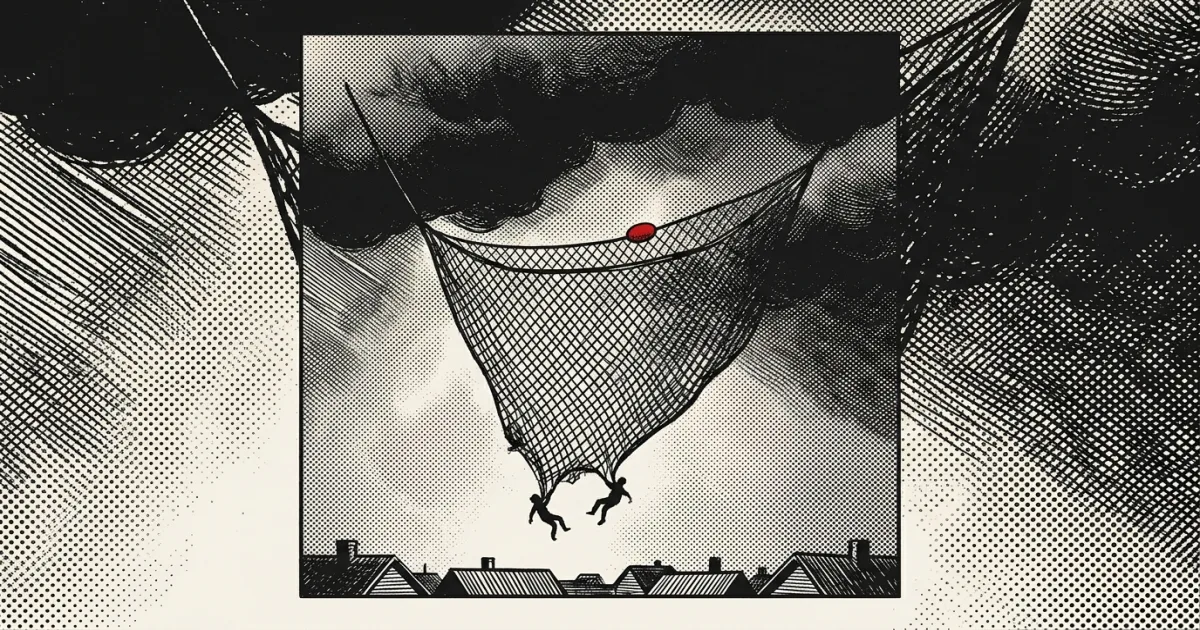
Fort thought the disappearances might be fishing. He meant fishing.
Dragnets coming down through the air, taken by witnesses for whirlwinds or waterspouts, and people hauled up to the table of “super-epicures somewhere.” Then he moved on, because he had more excluded facts waiting in boxes.
The Book of the Damned came out in 1919. Fort had spent years clipping reports of strange falls, lights, vanished people and impossible objects that the scientific institutions of his day ignored, mocked, or explained too fast. He called the rejected material damned.
I read him out of the public domain, for nothing, which is the right way to meet a book about what gets thrown away. What keeps me in those boxes ain’t the saucers.
It’s that somebody, in every institution I have ever had dealings with, sits at a desk deciding which facts get a folder and which ones go in the trash, and that decision has never once been neutral. Fort is the only writer I know of who built a whole book out of the trash can.
Fort was an archivist with a crowbar
He collected anomalies, attacked certainty, floated outrageous explanations, then kicked the legs out from under his own explanations before a reader could decide whether he believed them. The crank swaps public certainty for private certainty.
Fort left the replacements wobbling too. He reads like a man running a con on the whole idea of belief.
Intermediatism, he called it. True and false, science and superstition, fact and error were temporary cuts through one continuous reality, and things merged into other things. Any final system has to throw out inconvenient material and then defend the fence line as if nature built it.
His prose behaves the same way. It advances, jokes, doubles back, and hands you a cosmic theory with mud on its shoes. Reading him is like following a man through an evidence room while he switches the labels.
Earth as somebody’s property
Cattle are useful in a way that nobody bothers explaining to the cattle. Fort speculated that other worlds might have explored this one, colonized it, fought over it, or claimed it outright, and that we might be useful to whatever won in the way livestock is useful, or useful in some manner we don’t have the equipment to understand.
Certain cults or orders, he suggested, might work as overseers taking instructions from elsewhere. Then comes the fishing. Something values us for reasons that flatter us only if a trout enjoys being singled out by a gourmet.
Fort offered that possibility without a chain of proof under it. He was aiming at the reader’s confidence about ownership and scale.
The image works because fishing is ordinary. A hook enters one world from another and the fish gets food, then pain, then pressure, then absence, and it never sees the man holding the line until its own atmosphere turns fatal. That’s the part that sits on my chest at two in the morning.
Fort believed certainty was cheap
His proposals slide between sincerity, satire, testing and pure performance, and pinning him to one of them is a reader’s problem rather than his. He wanted to show how scientific authority tossed inconvenient observations while swallowing convenient ones on thin evidence. By offering explanations more bizarre than the approved story, he made the approval process visible.
Certainty is free. Anybody gets it by deciding to quit looking, and that’s the charge Fort kept filing against the journals of his day.
Anybody who wants a verdict out of him gets nothing. Fort is most useful before the verdict, back when the questions are still open: who picked the evidence, what went in the bin, which category did the binning, and whether the winning explanation is true or merely administratively comfortable. That’s the same damn question I ask about any platform that decides which of my readers get to see me.
His weakness grows out of the same method. A pile of odd reports doesn’t become reliable because science treated some of them badly, and exclusion hides treasure, fraud, error, weather, folklore, busted instruments, and some poor bastard at a newspaper filling a column an hour before deadline.
Fort keeps all of it in procession anyway, working outside the building and credentialed by nobody, which is a position I have loud opinions about. Every crank since has had a better career and less nerve.
Why the fishing image outlived the man
Cosmic horror falls apart the second the creature turns into a large animal with an unusual face. Fort’s fisherman stays outside the medium. We get the line entering our water and not one thing more.
It also does damage to human vanity. That’s the part writers keep stealing.
You want alien interest to mean you were chosen, studied, uplifted, hybridized, warned, initiated, something with a certificate at the end of it.
Fort allows that we might be bait. That is the most insulting fucking thing anybody has proposed about our species, and it might be right.
Most of the abduction literature since has been busy talking its way out of that, handing out hybrid programs and galactic councils, anything with a seat at the table. Fort’s version comes with no seat and no explanation, and it has fed a century of fiction because the worst part is left blank.
He never says what does the fishing, where the catch goes, or why we’re worth the trip. Answers would take the pressure off, and he was in the business of applying pressure. Machines that sort evidence for us now have the same problem he was pointing at, which is why I keep a hand on the wheel when I use one to write.
I’m going back through his damned procession one clipping at a time, watching for the one that twitches the line.
Sources
- Project Gutenberg: The Book of the Damned
- Project Gutenberg: Full HTML text
- Biodiversity Heritage Library: Bibliographic record
Frequently asked questions
Who was Charles Fort?
An American writer who spent his life collecting reports of anomalous events. The field called Forteana takes its name from him.
What did Fort mean by “the damned”?
Facts and reports that the dominant systems of scientific explanation shut out.
Did Fort claim aliens were literally eating people?
He raised the possibility that humanity might be owned, used, or fished for by outside intelligences. His style resisted stable commitment to any single explanation, so reading that as a firm claim misreads him.
Comments are open to members. Sign up free →