The Niche-Down Racket: Who Gets Paid When You Pick a Lane
/Mostly no, you shouldn't niche down: a teardown of the formula sellers, the deep-work gurus, the counter-gurus, and the one honest argument worth keeping.
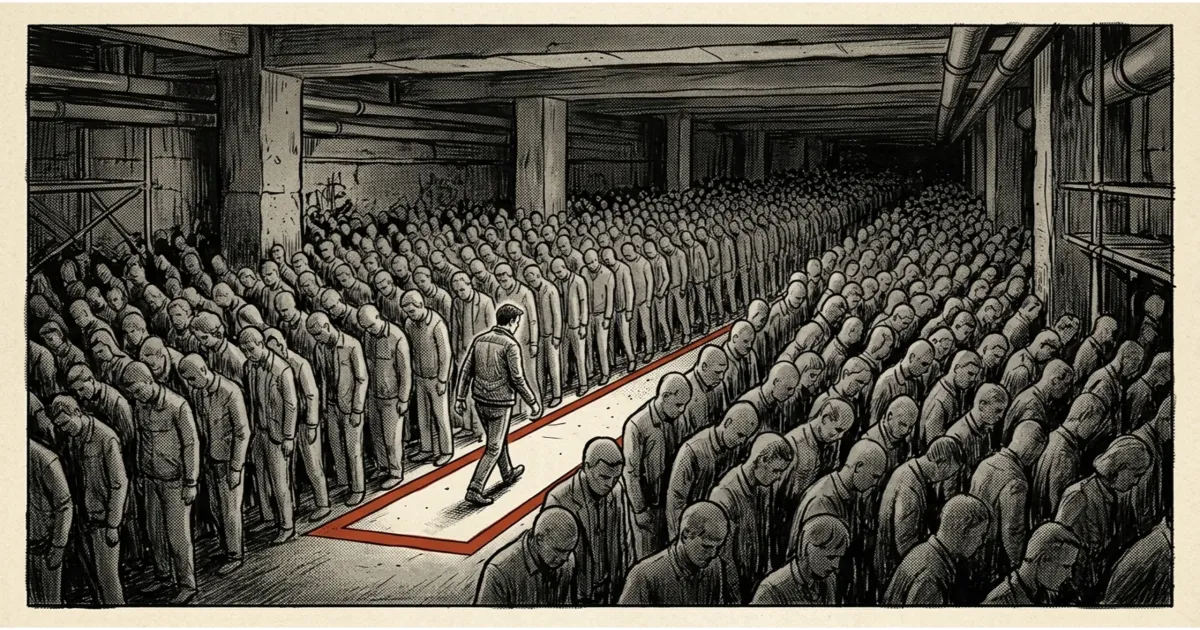
Should you niche down? Mostly no. You need a specific buyer and an angle a machine can’t fake, and you get both by going deeper into your own material, not narrower into a category somebody handed you. “Niche down,” as the creator economy sells it, is advice that pays the people selling it far more reliably than the people taking it.
The positioning manual covers what to do instead. This piece is about the advice itself. Where it came from, who eats off it, and which parts are worth stealing on your way out the door.
The lane I picked, and what it did to me
The first time I launched this site, I ran it by the book. Niched down into writing for profit, because that was the lane with money in it and every expert in my feed recited the same scripture: the riches are in the niches.
I have been writing since I was a kid. Professionally since about fourteen, at the local newspaper, back when a byline meant somebody with a red pen had decided your sentences deserved the ink. Writing was the one activity that never felt like work.
Six weeks inside my chosen lane, I dreaded opening the laptop.
Writer’s block I could have fixed. This was the dread you get before a shift at a job you hate, except the job was the thing I loved, wearing a lanyard.
Every post was me performing somebody who cared about conversion rates more than sentences, and the performance ate the writing, and then it started eating the writer. Burnout took the rest. I walked away from the whole operation.
When I came back, I ran it on one rule: I do what the fuck I want, and if people like it and pay me some money, that’s pretty fucking sweet.
That rule sounds like the absence of strategy, and it is the strategy. What follows is the teardown of the industry that tells you otherwise.
Where did “niche down” even come from?
The advice has a lineage, and knowing it changes how the commandment sounds.
Kevin Kelly was writing about “a niche of one” back in 1998, in New Rules for the New Economy. He meant something specific and almost opposite to the current usage: technology was getting cheap enough that a business could serve a market of one, a product tailored to a single customer.
The customer was the niche. The claim was about manufacturing; identity got bolted on later.
Direct-response marketers had already spent decades on the underlying move, segment the market, target the segment, convert the target, and when the internet-business crowd inherited it they boiled it down to a catechism for one-person operations. Pick a niche or die. A hundred profitable niches, downloadable as a PDF.
The advice made sense for selling ad space and affiliate links, and it outlived the conditions that justified it.
Then the phrase itself got flipped. “Niche of one” now circulates as a product in at least two shops.
Consultants sell it as a positioning formula: occupy a combination of problem, buyer, and method so specific that nobody can compare you to anyone. The nicheless gurus sell it as a philosophy: you are the niche, so document your life and productize your mind.
I mean a third thing by it, and the full argument lives in the manual: your lived material is the category.
What is the niche-down industry actually selling?
Three desks in the same shop. Different pitches, same register drawer.
The formula desk
This one sells the sentence. “I help [audience] achieve [outcome] without [pain].” The upgraded version stacks three specifics: a named problem, a named buyer, a named method with a trademark on it, then tells you to validate with twenty cold emails and rebuild your website around whatever survives.
Part of this desk is honest. Test with words before you build anything. Twenty short messages cost you an afternoon; a repositioned website costs you a month.
And a prospect answering “that’s interesting” is a death signal, not encouragement. Steal all of that. The testing discipline is the one thing on the desk worth carrying out.
Now watch what the formula does to the person using it. It starts from a spreadsheet of demand, works backward to a sentence, and files a human being under it. You didn’t build a position, you bought a franchise territory in somebody else’s chain, and the course was the franchise fee.
The sentence is “uncopyable” right up until the afternoon it starts working, because a sentence is the easiest asset on earth to copy, and the next operator in your category will paste it into their own header while you’re still paying off the rebrand.
There’s nothing of you in it. That’s not an accident. A formula with you in it couldn’t be sold to the next customer.
The deep-work desk
This one sells the lifestyle. Become nicheless. Document the journey. Sit with your ideas until they compound into a personal philosophy, then productize the philosophy.
Dan Koe runs the loudest version, and he’s right about one real thing: picking a niche off a list, for people you don’t care about, is a fast road to hating your work. I lived that. He has too, by his own telling.
Where the desk loses me is the floor it’s built on. The whole model assumes a life where you can sit six hours a day with your own thoughts and call it work.
Deep work is a luxury good. It runs on rent that’s already handled.
Take the same advice into a life with two jobs, a paycheck that dies four days before the next one, and an exit strategy getting built in forty-minute gaps, and it falls apart in your hands. You don’t need a philosophy of leverage at 11pm after a double, you need the specific thing that fixes the specific problem, priced so you can buy it without moving money around.
That’s the split. The deep-work desk sells philosophy, and its natural customer is a person a few steps behind the seller on the same road, buying the map to a place the seller hasn’t finished arriving at either.
I sell solutions, not philosophy, and normal people can afford them. A four-dollar field manual that fixes your Tuesday beats a worldview subscription every week it gets used.
The counter-guru desk
The third desk figured out there’s money in the backlash. “Niche down is terrible advice.” “Why you don’t need a niche.” Correct diagnosis, and I’m in the choir.
Then you scroll to the bottom and the cure is a course on building your personal brand, which is the same cage with the word “authenticity” painted on the bars.
The diagnosis was never the product; the dependence is. Every desk in the shop, pro-niche, anti-niche, nicheless, needs you to come back next quarter still unsure of what you are. A cured client stops paying.
Distrust every desk equally, including this one; I sell field manuals down the hall, and you should read them the same way you read everything, with one hand on your wallet.
The one honest argument for niching
There is one, and pretending otherwise would make this piece another product from the counter-guru desk.
Topical authority is real. Search engines reward a site that covers one territory deep instead of forty thin, and a blog that’s been ten years wide and shallow will lose to three years narrow and deep. If your whole plan is ranking for topic queries, focus wins, and anyone who tells you different is selling something too.
But authority in a topic is rentable, and the rent just went up. A language model has read every public word on your topic and can strip-mine the middle of it while you’re still picking a headline, and the search results are already choking on the output. Topic depth is exactly the asset the machine devalues fastest.
Depth in a person is a different asset class.
I’ve been to war four times on two fronts, stood on every continent except Antarctica, lived in Japan for a decade, and I hold three degrees with an eye on a fourth. I’m an ordained minister with twenty-some years of occult practice behind me, and I’ve been putting words in front of paying readers since I was fourteen.
A model can imitate my sentences. It wasn’t there for any of it, and it can’t be, and every year I’m alive the gap compounds.
You’re reading that list thinking it’s unusual. I’d bet money yours reads like a dare too.
Most people with a backstory that interesting spend it on nothing. They write “5 productivity mistakes” because a formula told them to, while the actual moat sits in a drawer.
Topical authority can be outspent and out-generated. Nobody can out-generate having been there.
So what do you do instead?
Shorter than the industry wants it to be.
Solve a problem you actually had. I build for myself first, and the fix usually turns out to help somebody else standing in the same hole. That ordering matters, because it means the work is real before it’s ever a product, and the demand test is confirmation, not divination.
Take systems from anybody, including me. I’ll hand you systems all day.
But you’re going to adapt them to your situation and your style, and then keep adapting them, because a system that doesn’t drift with time and experience is already dying. What worked in March gets rebuilt by November. That’s the maintenance schedule.
And run everything you’re offered, this page included, through the only filter that survives contact with the industry: anyone selling you a sure thing is full of shit.
The formula desk will have a new sentence for you by spring. New word for lane, new acronym, new trademark on the same cage. Your drawer’s still full.
Frequently asked questions
Is "niche down" always bad advice?
No. Focus is a tool, and the racket is selling focus as an identity. Narrowing helps when a real buyer exists and the lane is built out of your own material: a specific person, a specific problem, an angle you earned.
It hurts when you pick the lane off a list, spend your days impersonating whoever would own it, and sign a lease on a topic you’ll outgrow. The test is whether the niche came out of your life or out of somebody’s spreadsheet.
Where does the term "niche of one" actually come from?
Kevin Kelly used it in New Rules for the New Economy (1998) to describe a market of one: technology getting cheap enough to build for one customer at a time. The creator economy later pulled it toward identity, selling it as a positioning formula or a nicheless philosophy. The version practiced here turns it again: the creator’s lived material is the category, and the field manual is the long form of that argument.
What's wrong with the "I help X achieve Y without Z" formula?
It reduces a person to a sentence engineered for comparison, which is the opposite of what positioning is for. The sentence starts from market demand and works backward, so there’s nothing in it a competitor can’t copy once it proves out. Keep the one honest part, testing your offer with cheap words before you build anything expensive, and skip the part where you become the sentence.
Do I need a niche to make money as a creator?
You need a buyer and an angle: people who already pay to fix the problem you’re addressing, and a way in that a machine can’t manufacture. That’s narrower than “write about everything” and looser than “pick one topic forever.” The full demand test, including the thirty-day check, is in You Are a Niche of One.
Related guides
The teardown is half the job. These are the working versions of the alternative.
Comments are open to members. Sign up free →