You Are a Niche of One: The Field Manual for Positioning as the Only Person Who Makes What You Make
/Why pick a lane is the worst advice in the creator economy, how to find work that pays without amputating yourself, and how to stand out when AI made everyone a clone.
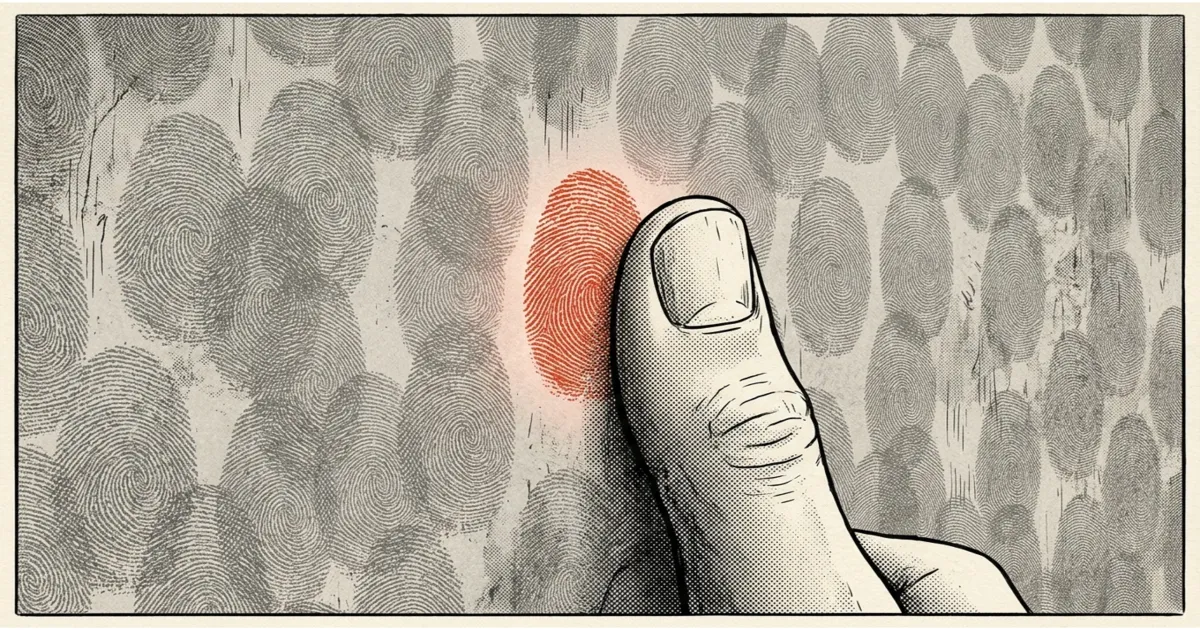
TL;DR: A niche of one is not a smaller topic. It is the specific pile of things you have lived through that nobody else can replicate. “Niche down” is advice built to make you legible to someone else’s marketing machine, not effective at your own. The work that pays in 2026 needs two things at once: a buyer with a wallet, and an angle a model cannot fake. Copy the mechanics, never the identity. Your only real competition is the version of you that already decided how this ends. This is the positioning hub for the whole field manual.
A niche of one is the recognition that the specific combination of things you have lived through, the skills you have stacked, and the obsessions you cannot shake is yours alone, and that combination, not your subject matter, is what makes your work impossible to clone.
You already are one. You were one before you opened this. The only decision left is whether you act like it.
This is the hub. Six other guides hang off it: turning the positioning into products that pay, an audience you actually own, systems that ship without you, a platform nobody can evict you from, AI that does not eat your voice, and short-form writing that says one true thing fast.
Why is “pick a lane” the worst advice in the creator economy?
Everyone tells you to find your niche. Pick a lane. Stay in it. Become the go-to person for that one specific thing.
What they leave out: your niche becomes your cell.
I have watched creators wall themselves into topics they outgrew years ago. The productivity guru sick to death of morning routines. The fitness coach who wants to write about Kierkegaard. The marketing expert secretly obsessed with throwing pots. They built an audience for one version of themselves, and now they clock in every day to perform a person they no longer are.
The creator economy runs a specific con, if you let it run on you. Someone got lucky once. Or got lucky twice and built a course about getting lucky. They tell you the road to steady income is narrow focus. “Niche down,” they say, like scripture carried down off the mountain. Pick one thing. Become the person for that thing. The riches are in the niches.
And it sounds right. It sounds like exactly what a reasonable person would do.
The advice is built to make you legible to their system, not effective at yours. Niche down and you become a predictable input in somebody else’s funnel. Categorizable. Sellable. Coachable. A customer for their course on how to win the niche they handed you.
The people selling this are not wrong about everything. Focus has value. Clarity has value. Knowing who you are talking to has value. But clarity and amputation are different procedures, and most niching advice is closer to surgery than strategy. They want you to slice off the parts that don’t fit the template: the weird interests, the side obsessions, the connections between domains nobody else sees because nobody else carries your exact stack of experience. They want less of you, because less of you is easier to file.
The alternative is not chaos. It is not dumping random thoughts about everything into the feed. The alternative is becoming a niche of one. You stop claiming expertise in a topic and become known for how you think. Your perspective is the through-line. People follow your lens on the world, not your credential in a category.
Which means you can write about business on Monday and creativity on Wednesday. Drop a book recommendation next to a half-formed theory about why most advice is poison. You evolve without shedding your readers. The goal was never to be everything to everyone. It is to be unmistakably yourself to the right few.
What does “a niche of one” actually mean?
A niche of one is not a marketing strategy. It is a recognition.
You already are one. You were one before you opened this. The specific combination of things you have lived through, the skills you have piled up, the obsessions you cannot shake, the weird cross-domain pattern recognition that fires when you have studied enough different subjects to see the bones underneath all of them: that combination is yours. Nobody else has it. Nobody can run it back.
A niche of one means you quit forcing your work into someone else’s category and let the category grow up out of the work instead.
The phrase itself is older than the creator economy. Kevin Kelly was using “a niche of one” in 1998 to describe a market of one, technology cheap enough to build a product around a single customer, and the advice industry has been bending the words to fit whatever it’s selling ever since. Where “niche down” came from and who gets paid when you pick a lane is its own teardown: The Niche-Down Racket.
I learned this the expensive way. I was writing about “operations for creators” because some framework told me to pick a lane. The language was always military in a way that told me nobody using it had ever actually been in the military, because real operations are messy and half the plan dissolves on contact with reality and you adapt or you die. These blueprints didn’t have room for adaptation. They had room for obedience.
And the writing was fine. Competent. The kind of thing that could’ve been written by anyone with a business degree and a ChatGPT subscription. It had no blood in it. No weird. No me. I was producing content the way a factory produces widgets. Identical. Interchangeable. Safe.
Nobody needs another widget.
So I killed it. All of it. Burned the content calendar, deleted the pillar strategy, started writing about whatever the hell I actually wanted. Chaos magic one week. Japanese philosophy the next. A cosmic horror novella after that. Then guerrilla apartment gardening. Then military systems thinking aimed at a one-person operation. Then Gnostic theology, then a rant about the VA, then a guide to fermentation.
Best decision I ever made.
The raw material is the whole point
Every few weeks somebody asks what system I use. What’s the framework. How do they run back what I am doing. The honest answer lands badly: you can’t. Not because I am special. Because you are, and what works for me will die in your hands, because it is welded out of the raw material of my specific life.
Twelve years in the Air Force. 8.5 years in Okinawa. Deployments to Iraq and Afghanistan. A decade of chaos magic practice. A doctorate in Metaphysics. Jobs at Google, GoDaddy, CBRE. Construction work. Manual labor. A Cuban wife. Combat trauma. An encyclopedia brain that won’t stop making connections between things that aren’t supposed to connect.
That is my raw material. Yours is something else entirely. Your niche of one gets built from whatever you have survived, whatever you cannot stop turning over, whatever you know that nobody else knows in quite the shape you know it.
No course teaches that. No framework catches it. No guru can sell it back to you, because it was already yours and always was.
It looks like chaos from the outside. It isn’t.
From outside it reads as a mess. No fixed topic. No reliable format. Philosophy one week, fiction the next, a practical walkthrough after that, then a rant about institutional betrayal that runs longer than it has any right to. It looks like a person who has no idea what he is doing. It is a person who stopped caring how it looks and started caring what it is.
Chaos and freedom are not the same animal. Chaos is random. Freedom is chosen. I pick what to write each week off whatever is alive in my skull, and that is not random. It is the most curated thing in the world, curated by a lifetime of specific experience and obsession no algorithm and no content strategist could ever assemble.
And here is the part that pays. I did not find my audience. They found me. Because I was finally making enough noise being myself that the signal carried. Readers smell authenticity the way prey smells a predator, fast, below conscious thought. They smell its absence just as quick. They know when you write because you want to and when you write because a content calendar held a gun to you.
The Rule of One. If a niche of one is the recognition, the Rule of One is the only repeatable system that lands it on the page: one reader, one problem, one solution, one call to action. Drive it with questions. Tell a short story that shows stakes. Then run one pass before you publish: prune, focus, dramatize, deliver. Prune the extra ideas. Focus the angle into one line you could say out loud. Dramatize with a quick scene. Deliver a single step the reader can take now. Precision beats volume. Most content tries to do too much, chasing five ideas and three audiences and zero outcomes. Make one promise. Land one payoff. Leave one clear next step.
How do you find work that actually pays without cutting off your edges?
A niche of one is a recognition. You still have to eat. The move is finding where money already changes hands without amputating the parts of you that make the work worth reading.
The whole thing fits in two questions. First: do people in this space already hand cash to someone to fix this exact problem? Not “are people interested.” Interest is free. Hunt for existing paid products, live affiliate programs, courses with real reviews, somebody quietly making rent off it. If you can’t name three things people pay fifty bucks or more to solve, walk. That niche is a hobby in a business costume.
Second: what can you say here that a model scraping the open web can’t? This is the entire game now. The model has read everything public. It has not lived your specific failures. It wasn’t in the room. It has no scars, no job history, no weird hybrid of two things nobody else welds together.
- Buyer demand tells you the niche can feed you.
- Your angle tells you the niche can’t be drowned under the next ten thousand AI posts.
Miss either and you picked wrong. A great angle on a topic nobody pays for is a diary. Perfect buyer demand with no angle is you, a content mill, and a race to the bottom you lose.
The old list of 100 niches is dead
Back in 2024 you could pull “personal finance” or “productivity” off a list, write competently, and skim a little traffic off the edge. That math broke. Any model can vomit a thousand words on budgeting in nine seconds, and the search results know it. Google’s AI answers eat the click before you ever see it. The generic middle of every topic is buried under a landfill of synthetic text that all says the same thing in the same beige voice.
So a niche by itself buys you nothing now. “Travel.” “Fitness.” “Crypto.” Those aren’t niches. They’re weather systems, and you’re one raindrop.
The part of the old gospel that still holds: chase evergreen demand, not trends. A trend is a fire. Warm your hands for a week, then stand in the ash. The broad areas that have moved money for twenty years still hold buyers, but only when you cut each one down to a specific person.
- Money and work. Not “personal finance.” Personal finance for nurses working three jobs. Not “freelancing.” Contract pricing for people who hate negotiating.
- Health you manage forever. Sleep, anxiety, specialty diets, recovery. The stuff with no finish line, so the reader keeps coming back. Stay clear of medical claims you can’t stand behind.
- Skills people learn to escape something. Career changes, a language for a real move, building with new tools. Motivated people buy.
- Hardware and software people obsess over. Cameras, home studios, the Jeep build, the right app. Reviews from someone who actually owns the gear, not a spec sheet rewrite. Affiliate revenue lives here.
What dropped off: celebrity news, daily motivation, general life updates. No buyer, no exit, oversaturated since before the bots showed up. Filler in 2024, poison now.
Find the corner shaped like you
You stop trying to own the topic and start owning the corner of it shaped like you. That is what “niche of one” means in practice. Not a smaller topic. You, the variable nobody else carries. The combination is the moat. Ten thousand people write about productivity. Almost none write it from inside a VA disability claim, or for someone running a side business in a language that isn’t their first.
Three ways to find the corner.
- Stack two domains. Cooking plus your grandmother’s country. Music production plus the specific broken software you wrestle nightly. The intersection is rare by default.
- Pick the buyer everyone ignores. “Budgeting” is dead. “Budgeting for couples where one earns five times the other” is a person who reads every word.
- Lead with the scar. Write the thing you learned the expensive way, the failure you actually survived. A model fakes authority. It cannot fake having been there. Your worst year is your best material.
Run a thirty-day check before you commit. Hang out where this buyer actually gathers. Screenshot their real complaints. Make three pieces and watch whether strangers ask follow-up questions or scroll past. Then put a small paid thing in front of them and see if one stranger buys inside a week. One real sale beats a thousand likes. When you’re ready to build that small paid thing, the Make and Sell Small Things guide is the next step.
Two things people get backward about the corner. The “treasure map” version of niche-hunting, the one that says run keyword planners until profit appears, has it inverted. Market research tells you where the money is. It cannot tell you where you fit in it. And the ikigai diagram everyone loves, that passion-meets-profit overlap, is incomplete rather than wrong. The intersection of passion and market need is real, but the spine is still you, not the subject. The richest corner is the one where your lived material does work no list could ever assign you.
How do you stand out when AI made everyone a clone?
Most of what we consume is copywork. One hit spawns a hundred look-alikes. Transformers breeds Transmutators. Jurassic Park breeds Jurassic City. Online, same pattern. For every Dan Koe, Kieran Drew, or Nicolas Cole, thousands echo the beats and pray the algorithm mistakes the echo for the source.
I copy too, but for mechanics, not identity. Replication is my lab. I want to see how a thing moves. Where the weight sits. Why a line sticks. I take it apart, label the pieces, then rebuild it so it fits my hands. That’s practice, not publishing.
The trap is mistaking imitation for creation. Most people stall at the surface. They mimic tone, hooks, and formats and expect the results to follow. Worse, some lift the work whole and bolt their name on it. They lose, because people aren’t stupid. They can feel when the writer has no grasp of the mechanics. Outcomes live in systems, not skins.
Here is the useful version of copywork: study, name, twist, ship.
- Study the structure until you can sketch it from memory.
- Name the mechanics in plain language so you can reuse them.
- Twist one variable at a time until the piece sounds like you.
- Ship the version only you could have made.
Use imitation to learn. Then torch the template. Bring your point of view, your constraints, your lived context. The machine’s favorite product is bodies that follow orders without asking questions, identical newsletters with identical advice from identical people who read the same three books, took the same two courses, and now teach each other how to teach each other. Being just like everyone else is not authenticity. It is camouflage on a clone.
For the full method on using the machine without sounding like everyone who uses the machine, the Writing With the Machine guide is the deep cut: the model is an averaging engine, so the way to keep your voice is to catalog the words you’d never say, not to feed it more of what you already sound like.
Are you sure those thoughts are yours?
There is a darker layer under the clone problem, and it earns naming, because it explains why “niche down” feels so right while being so wrong.
I was working on something the other day when a thought walked in: “You’re not scaling. You’re leaving money on the table. You should be building funnels.” It didn’t feel like mine. It had a pushy, external texture. Like someone else’s voice renting space in my skull. Because it wasn’t mine. It was memetic programming I’d installed across years of consuming creator economy content, and the meme was activating to defend itself, because I was doing something that didn’t serve its replication.
Most of what you think isn’t you thinking. It’s memes, self-replicating information structures, using your brain to guarantee their own survival. Your business goals, probably borrowed from gurus. They feel like yours because they’ve squatted there so long. But some carry that texture of otherness. They generate guilt when you don’t serve them. They go defensive when challenged.
I know the wiring because I used to build them. When I was a chaos magician, this was one of my specialties. The quick tip: notice which thoughts feel foreign. That’s your memetic immune system trying to flag an intruder. The “you must niche down or fail” voice is one of the loudest installed programs in the whole creator economy. Run it through the test. See whose survival it actually serves.
Who is your only real competition?
You scroll past someone doing the thing you want to do. They have the audience, the deal, the numbers. And the part that burns is you know you could do it. Maybe better. So why are they up there and you down here. Then it curdles. The whole thing starts to look rigged. You close the file, go back to the job that drains you, and sit in it.
That writer you measure against has no idea you exist. They aren’t racing you. They’re heads-down in their own mess. The only person clocking your splits is you, and you’re running a stopwatch built out of someone else’s life.
Comparison fails because you set your inside against somebody else’s outside. You see the published post. You don’t see the eleven dead drafts, the lost years, the stuff they buried in the yard.
- The metric you envy is partial. Follower counts hide churn, burnout, the day job they still keep.
- The metric you envy is late. You’re watching the result of a decision they made years ago.
- You’re measuring against someone else’s scoreboard, built for their life, their lane, their tolerance for grind. Nothing on it says a word about yours.
There’s an operational version of this, and it beats envy. You don’t study the enemy to copy them. You study them to find the gaps. Your competition isn’t your competition. They’re reconnaissance. They show you what works, what fails, and where your particular expertise can take ground. Quit dissecting what everyone else built. Start building what only you can. Instead of competing on topics, compete on operational credibility. Your edge isn’t what you write about. It’s how you walk into problems others can’t crack.
So watch the people ahead of you, but study the method, not the scoreboard. The number is the part you can’t copy. The how is the part you can. Find three or four people doing roughly what you want to do. Take the work apart. How do they open. Where do they drop the turn. What do they cut. What did their stuff look like three years back. Go dig it up. It was rough. That’s the point. And say it out loud, too. Tell them the post landed. A feed full of people you’re rooting for hits different than a feed full of people you resent.
The competition was never the writer with the better numbers. It’s the version of you that already decided how this ends.
How do you get noticed without optimizing for the algorithm?
I had a bad habit of over-explaining everything. Every email, every post, every conversation. Anxiety filled the silence with more words, more context, more justification. Then it landed: nobody remembers the person who said everything. They remember the person who said the one thing that mattered.
Here is what makes people remember you.
- Say less. Cut until it hurts, then cut again.
- Give more than you ask. It opens a door few people want to walk back out of.
- Say what others won’t. Challenge the obvious. Question the popular advice.
- Show your mess, not just your wins. Perfect is boring.
- Be consistent, not perfect. Showing up beats showing off.
- Make people think, not just feel good. Inspiration evaporates by Thursday.
- Build in public. Document the process, not only the results.
- Ignore vanity metrics. Connection isn’t a number.
- Say no more than yes. Boundaries make you memorable.
- Be yourself, not a brand. People connect with humans, not a performance.
A bonus question worth sitting in: why do you want to be remembered? Not how, not for what. Why. Go deeper than the surface answer. You’d be amazed what you turn up about yourself, and your business, when you actually stop and reflect.
The deeper craft of saying less lives in the Cut Until It Bleeds guide.
Stop optimizing for strangers
I used to check my metrics every morning. Views, engagement rates, conversion data. I’d reshape the content around whatever performed. The result felt operationally sound and strategically hollow. An audience that read like data points. Success that read like it came off an assembly line.
Algorithms reward broad appeal. Broad appeal grows shallow relationships. The person scrolling past your post is not the person who buys your product. Your real audience, the ones who pay, don’t want the algorithm-optimized version. They want the process documentation, the systems behind the curtain, the strategic thinking happening in real time. They want to watch you build, not just inspect the polish.
That is why you publish on your own platform first and syndicate everywhere else. Build for your customers, not the platform. Platform independence isn’t anti-growth. It’s anti-fragility. The full version of that argument, the part where you draft your exit on day one, lives in the Build and Own Your Audience guide and the Own Your Platform guide.
How do you make your message actually land?
Most creators think reaching people is about volume. It isn’t. It’s about depth. A message that sticks runs a simple system: clarity, relevance, repetition, action.
- Clarify your core message. If you can’t say your idea in one line, nobody else will catch it either. Strip it until one sentence carries the load.
- Know who you’re talking to. Speak in your audience’s language. Address their fears, hopes, and everyday grind. If it doesn’t read like it was written for them, it won’t land.
- Use stories, not abstractions. People keep a story they felt, not a fact they skimmed. Hand over the messy parts: what worked, what failed, what it actually looked like in practice.
- Show up consistently. A single post rarely sticks. Repetition does. Familiarity is what embeds a message in memory.
- Anchor it in emotion. Data fades, feeling doesn’t. The emotional charge is the part people carry out the door.
- Keep it useful. If your audience can’t do anything with the message, it dissolves. Leave one step they can take today.
- Refine with feedback. Don’t assume you nailed it. Watch responses, read comments, study what spreads. Adjust until the signal cuts the noise.
It isn’t magic. It’s operational. Strip the message down, tell it like a human, repeat it, make it useful.
You don’t need to go big. You need to go true.
I used to think I had to be everywhere. Seven social platforms. Daily posts. A “personal brand” screaming for attention in a crowded room. The result was burnout by Tuesday, content that felt like performing, and an audience that never really knew who I was.
You don’t need to go big. You need to go true. The creator economy wants you convinced you need more: more followers, more platforms, more content, more moving parts. You can build something that matters by doing less. Simple things, shared straight. Becoming unmistakably yourself instead of another voice in the static.
The fastest way to grow, for what it’s worth, is not joining every big creator community you can find. I tried that and harvested spam, ego battles, and crickets. The rooms that actually grew my audience had real dialogue, support running both directions, relationships built over time. Creators with audiences ten times mine have shared my work, not because I paid them or begged, but because we became friends first. That’s how collaboration works once you stop treating people like marketing channels. Join smaller rooms where conversation happens. Give before you ask. Share their work before you angle for them to share yours.
How do you build a niche of one that doesn’t burn you out?
A niche of one is freedom, but freedom you can’t sustain is just a slower fire. I’ve hit the wall three times. Not the dramatic kind where you quit everything and find yourself in Bali. The boring kind, where you dread opening the laptop and every email reads as an obligation. The third time, I was done being done.
So I started tracking exactly where my energy bled out. Turns out I was working stupid, not working hard. Scattered across seventeen platforms. Saying yes to every small ask. Treating recovery as weakness instead of maintenance. The fix was not more motivation or a better mindset. It was better systems. Micro systems. Small changes that guarded my energy before I needed guarding.
The frame I keep returning to is the Four Pillars. A whole system for living, not a stack of tactics. You need all four. They hold each other up.
- Build is what you create. The tangible things that solve problems for you and others. Products, systems, tools. Creation over consumption.
- Write is how you say it. Clear, honest communication. Finding your voice and using it. No performance, no BS, just truth.
- Think is the internal foundation. The mindset work. How you reframe an obstacle, weigh what matters, and choose your response instead of reacting.
- Live is daily application. The simple systems and habits that keep it sustainable. How you actually operate when life turns complicated.
You can’t build without thinking clearly about what matters. You can’t write honestly without examining your own thoughts. You can’t live simply without systems that hold it up. Pull one pillar and the whole thing tips. I spent a decade learning this in Japan, then another decade rebuilding a life on it. It holds when everything else gives.
The operational half of “Live,” the part where you build a business that ships without you in the room and survives a bad week, is the Systems, Not Hustle guide.
Frequently asked questions
What does "niche of one" actually mean?
It means your niche is not a topic, it is you. The specific combination of things you have lived through, the skills you have stacked, and the obsessions you cannot shake is a corner of the market nobody else can occupy. It is not a marketing strategy you adopt. It is a recognition of something already true. You stop fitting your work into someone else’s category and let the category emerge from your work.
Do I have to pick just one niche?
You pick one buyer and one angle. The topics under it can sprawl. “Veteran going broke after a Fortune 100 job, learning to write his way out” is one niche of one, and it can cover money, work, mental health, and craft without ever wandering off the spine. The spine is you, not the subject.
Isn't writing about everything a recipe for no audience?
There’s a difference between chaos and freedom. Chaos is random. Freedom is intentional. Writing about whatever has its teeth in your brain that week is not random when the curator is a lifetime of specific experience. The through-line is your lens, not your topic. Readers don’t follow you for the subject. They follow you for how you see.
How do I know a writing niche has real buyers and not just readers?
Name three things people already pay fifty dollars or more to solve in that space. Existing courses, paid newsletters, affiliate programs, freelancers booked solid. If you can’t find them, the money isn’t there yet, no matter how lively the comment section looks.
How do I stand out when AI can write about anything?
Copy the mechanics, not the identity. Study how good work moves, name the parts, twist one variable until it sounds like you, and ship the version only you could make. The model has read everything public but it hasn’t lived your failures or been in the room. Lead with the scar. A machine can fake authority. It cannot fake having been there.
How do I stop comparing my work to other creators?
Stop looking at the numbers and start looking at the moves. The metric you envy is partial and late, built for a life that isn’t yours. Reverse-engineer how someone structures a piece or builds a habit. That’s transferable. Their follower count is not. And remember the writer you’re measuring against has no idea you exist. Your only real competition is the version of you that already decided how this ends.
What is the Rule of One?
One reader, one problem, one solution, one call to action. It’s the only repeatable system that makes a niche of one land on the page. Before you publish, run one pass: prune the extra ideas, focus the angle into one line you could say out loud, dramatize with a quick scene, deliver a single useful step. Precision beats volume.
How do I keep a niche of one from burning me out?
Build on all Four Pillars: Build, Write, Think, Live. Most burnout comes from working stupid, not working hard, scattered across too many platforms and saying yes to everything. The fix is systems, not motivation: micro changes that guard your energy before you need guarding. Keep your overhead low and your expectations honest. When the money becomes the point, the work starts dying.
This is the positioning hub of the field manual. Once you know you’re a niche of one, the next moves are practical: make and sell small things, build an audience you own, run systems instead of hustle, own your platform, write with the machine, and cut your writing until it bleeds.
You already are a niche of one. The only question left is whether you’re going to act like it.
Comments are open to members. Sign up free →