The Free Front Desk: An Indie Creator's Playbook for AI Search
/AI search is becoming the front door for indie creators and almost nobody is building for it: my own server-log receipts, a straight answer on zero-click, and the full free playbook I ran on this network.
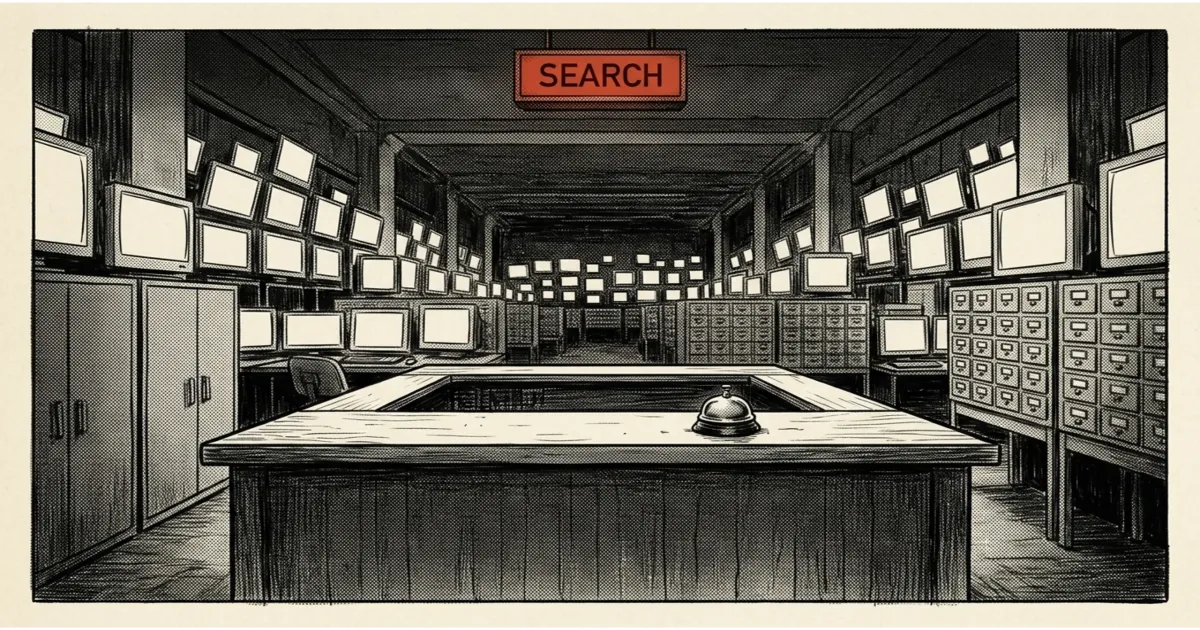
How does an indie creator get found through AI search? You make your site effortless for the machines to read, cite, and attribute: consolidated pages that own their questions, answers at the top, structured data underneath, an llms.txt at the root, markdown twins of your best work, and your sitemap registered where the engines drink.
All of it is free. Almost nobody is doing it. This is the whole playbook, with my server logs as the receipts.
What I found in the logs this morning
I went digging in my access logs today, the raw ones, the kind nobody reads because a dashboard usually reads them for you.
In the first ten days of July, AI assistants fetched pages from my site on behalf of live human users about fifty times a day. Claude pulled around 350 pages for people mid-conversation. ChatGPT pulled about 170.
Every one of those fetches is a human being, somewhere, asking a machine a question, and the machine walking over to my shelf to answer it.
Perplexity and the search-crawler variants stacked another hundred-plus on top, mostly index crawlers filing pages for questions nobody has asked yet. Call it sixty machine reads a day all told.
The training crawlers were in the building too. Meta’s hit the site about two thousand times this month; OpenAI’s and Anthropic’s, around a hundred sixty each.
Apple’s search crawler, the one that feeds Siri and the AI stack behind it, came through nearly nine hundred times on its own.
My little static network on a five-dollar host is getting read more thoroughly by machines than most sites get read by people.
And the number that should reorganize your whole strategy: in six weeks, eleven humans clicked through to my site from inside an AI app. Ten from Claude, one from ChatGPT.
Sixty machine reads a day. Eleven human clicks in six weeks. Hold both of those numbers, because the gap between them is where every publisher is panicking and where you and I are going to eat.
Why this is the indie’s fight to win
The platforms spent fifteen years making themselves mandatory. You wanted readers, you fed the feed, and the algorithm decided whether your work deserved to exist that day. Discoverability got renamed to reach, reach got metered, and the meter got sold back to us.
AI search removes that dependence. An accurate AI listing doesn’t care about your posting cadence, your engagement rate, or whether you bought the checkmark, only whether the page answers the question.
More people are moving more of their asking into AI environments every month. I believe this is the death knell of the corporate walled-garden platforms and their shitty algorithms, and I don’t say that with a black armband on.
The window is real and it’s open right now for one structural reason: an indie creator can move faster than any major corporation can imagine. I restructured this entire network for machine readability in a week, alone, on a Chromebook, and a media company needs a committee and a quarter to approve the same work.
The people who don’t move now will catch up later at retail, in somebody’s course about the thing that’s free today.
The engines are also, for the moment, blind to seniority. A model deciding what to cite has read the giant publisher and it has read you, and it weighs the answer, not the masthead.
That flattening will not last forever. Nothing this good ever does. Which is the argument for moving now, not for waiting until the playbook is a category with gurus in it.
The zero-click problem, answered honest
The objection is real, and pretending otherwise would make this piece a sales page.
AI search answers in place. The machine reads your page, hands the user a synthesis, and most of the time the click never happens. My own sixty-to-eleven ratio is that dynamic in the wild.
The publishers screaming about it aren’t wrong about the mechanics. Rank, click, visit, ad money: that chain fed the content web for twenty years, and AI answers cut it at the second link.
But zero-click is only a death sentence if your product is the click.
The ad-funded content mill sells traffic. The machine just disintermediated it, and I’ll save my flowers. An operator who sells the work is playing a different game.
A model can summarize my teardown of the niche-advice industry. It cannot be the full manual, the products on the shelf, the list I own, or the voice you’re reading right now. The machine takes a summary and leaves attribution, and attribution compounds: an engine that cites you is planting your name in a conversation you were never in.
And look closer at the eleven. A visitor who clicks through from an AI answer wanted more than the machine’s synthesis. That is the deepest-intent reader that exists.
Ten of mine came from Claude, arrived at a specific page, and found the email form and the catalog waiting. The chain got shorter and more honest: citation, recall, one visit, owned relationship.
Same doctrine the rest of this network runs on, rent the reach, own the readers. AI engines are just the newest rented reach, a front desk that works all night and bills nobody.
The playbook, all of it
Everything below is what I actually ran on this network. No secrets held back, no course at the end. Steal it in an afternoon or a week.
Kill your own cannibalization first. I had seven guides fighting each other for the same searches, so the engines picked nobody. I merged them into five field manuals, lost nothing but the repetition, and put 301 redirects on the old addresses so every link they’d earned flowed to the new homes. One page per question. The machine wants a single best answer to hand its user; stop making it choose between four of yours.
Put the answer at the top. Every anchor guide on this site opens with a direct answer to the question the page exists for, two or three sentences, before any story. Machines extract; extraction favors the page that answers cleanly in the first breath. The story still gets told. It doesn’t stand between the question and the answer.
Ask the questions out loud. My section headings are plain questions, because that’s what a human types into the machine and what the machine matches against. Add a short FAQ block where it fits, marked up with FAQ structured data so the answer arrives pre-labeled.
Ship an llms.txt. A plain text file at your site root that tells AI systems what the site holds and where the best of it lives. Mine names every room, flags the anchor guides as the place to start, and states the canonical identity so attribution lands on the right name. Ten minutes of work.
And here the receipts cut against me: fifteen fetches of that file all month, mostly browsers and somebody’s curl script, not one answer-engine crawler in the pile. The agent tools, Claude Code and Cursor and their cousins, do read it. The engines haven’t committed, and Google’s John Mueller says no AI service has even announced using it.
I serve one anyway. It’s a cheap bet on a young standard, and if the engines ever show up for it, mine’s already sitting on the counter. Anybody selling llms.txt as a ranking lever is selling a lever attached to nothing yet.
Give the machines a cheap copy. Every post and guide here has a markdown twin: append index.md to the URL and you get the whole piece as plain text at a fraction of the HTML’s token cost. The model doing the citing has a context budget. The site that fits more content into that budget wins the comparison against the site drowning its words in markup.
Open the door in robots.txt. My robots file welcomes the answer-engine crawlers, the assistant fetchers, and the training bots by name, and blocks only the scrapers with no upside. You cannot get cited by a machine you told to leave.
Structured data, the boring kind. Person, Organization, Article, FAQ. It’s how the machine knows who wrote what and resolves you to one identity instead of three half-matches. One name, everywhere, with the schema to back it.
Register where the engines drink. Two portals cover the whole corporate side: Bing Webmaster Tools feeds ChatGPT search, Copilot, and DuckDuckGo; Google Search Console feeds Gemini and AI Overviews. Submit your sitemap at both. Then wire IndexNow, a free ping that puts your changed URLs in front of Bing in minutes instead of waiting on the crawl. My deploy script submits all five hundred URLs automatically every time the site ships. Perplexity, Claude, and Apple need no signup at all; their crawlers find you if your robots file lets them.
Then measure from the logs, not a dashboard. Grep your access logs for the assistant user agents and the AI-app referrers. The dashboards weren’t built for this yet; the logs already know. That’s where my sixty-a-day number came from. Yours is in there too.
What I’m not promising
Eleven clicks. That’s the other number I told you to hold.
This is early. The engines are still deciding what they’ll be, the citation formats change monthly, and anyone who tells you they’ve got AI search figured out is selling you a sure thing, and you know my rule about those.
What I can show you is a field, not a harvest. It’s cheap right now, the big operations are too slow to plant it, and the machines already walk through it sixty times a day whether anybody tends it or not.
The herd is still optimizing thumbnails for an algorithm that stopped mattering. The machines read my whole shelf again last night. One of us is early, and I’ve stopped believing it’s them.
Frequently asked questions
What is AI search optimization, or GEO?
Generative engine optimization is making your site easy for AI systems, ChatGPT, Claude, Perplexity, Gemini, to read, cite, and attribute. It runs on the same foundation as classic SEO, clean structure and real answers, plus machine-specific surfaces: an llms.txt file, markdown copies of your pages, structured data, and open robots rules for AI crawlers.
Classic SEO ends at the ranking. This gets your words into the machine’s answer with your name attached.
How do I get my site cited by ChatGPT or Claude?
Be the cleanest answer to a specific question: one consolidated page per question, the answer in the first paragraph, question-style headings, FAQ schema, and a markdown twin the model can ingest cheap.
Then make sure the engines can reach you: welcoming robots.txt, plus your sitemap registered in Bing Webmaster Tools (ChatGPT’s index) and Google Search Console (Gemini’s). Depth and first-hand experience win the tiebreak, because the model has read everything generic already.
Doesn't AI search kill my traffic?
It kills the casual click, and it was never yours to keep. My logs show machines reading sixty times a day against a handful of human click-throughs. Fatal, if you sell traffic.
If you sell the work itself, the machine is a free front desk: it drops your name into conversations you’re not in, and the rare visitor who clicks through came looking for more than the summary. Capture them with a list you own and the chain still closes.
What is an llms.txt file?
A plain text file at your site root, like robots.txt but for meaning instead of permission. It lays out what the site is, who runs it, and where the most cite-worthy pages live, in clean markdown a machine can ingest without parsing your whole theme.
Adoption is the catch. Agent tools like Claude Code and Cursor read llms.txt today; the answer engines haven’t committed to it, and their crawlers haven’t touched mine all month. It takes minutes to write, costs nothing to serve, and anybody promising rankings off it is ahead of the evidence.
Do I need to pay for any of this?
No, and that’s the point. Every move in this playbook, consolidation, answer-first structure, schema, llms.txt, markdown twins, robots rules, Bing and Google registration, IndexNow, log measurement, costs nothing but hours.
The window exists because the expensive operations are slow and the cheap operators aren’t looking. The only spend is the work.
Related guides
The machine half of the operation, and the ground it stands on.
Comments are open to members. Sign up free →