Mostly Ghosts: How to Build an Audience You Actually Own
/A working creator's field manual for how to build an audience you actually own: rent the reach, own the readers, and run newsletters, lists, and marketing that don't make you hate your life.
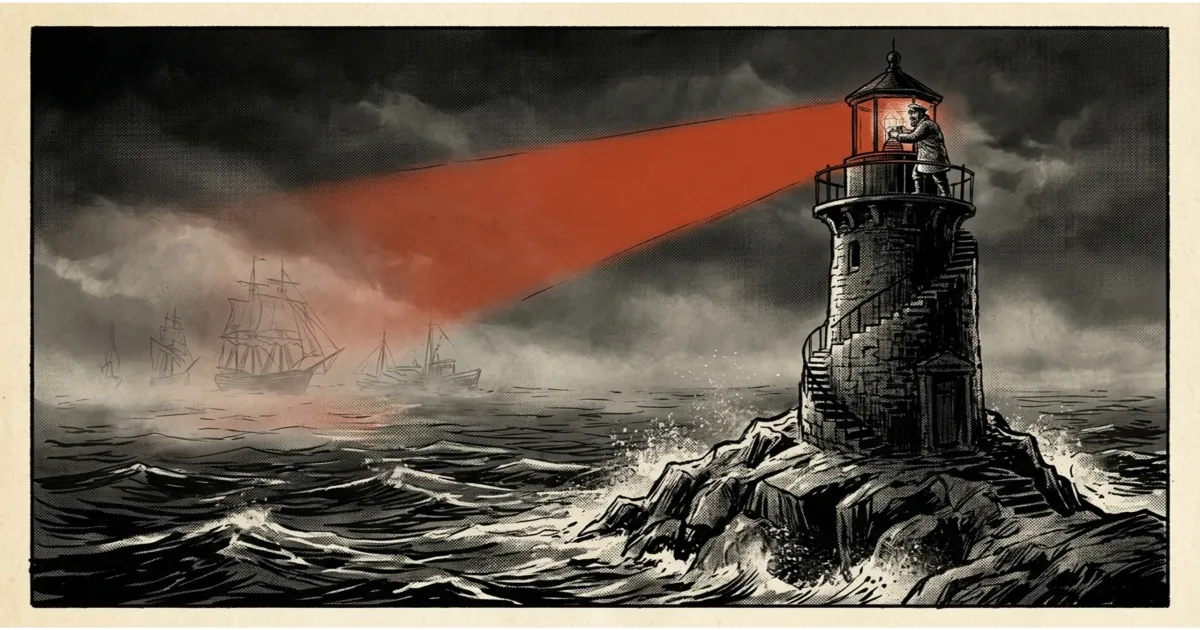
TL;DR: You don’t need a hundred thousand subscribers. You need a hundred readers who would notice if you stopped publishing. Build where the people already are, because that’s where the exposure is, but point every call-to-action at something you own. A follower is rented. An email address is yours. Draft your exit on day one. Then write to one real person, prune the dead weight without guilt, and stop sounding like an ad. The list is the only asset you take with you when the platform changes the rules on a Tuesday.
This is the part the growth guides skip: not the subject-line tricks, but the honest accounting of what “audience” actually is, where the real readers come from, and how to keep them without selling your soul to a dashboard. It was written from a Nashville apartment on a Chrome OS laptop, not a guru’s stage.
This is one panel of a larger field manual. If you haven’t sorted out who you are and what you actually make, start with You Are a Niche of One. Everything below assumes you have something worth sending.
The lie inside the word “audience”
Saturday morning. A newsletter went out at six. By eight the dashboard says forty-three opens, three new free subscribers, one unsubscribe, which is roughly the same shape every Saturday morning makes. The little green arrow points up. Some other tab plays its small slot-machine chime.
I’m drinking coffee out of a mug I brought back from Okinawa years ago. There’s a fish on it.
The number on the dashboard says north of five hundred subscribers. It says this in friendly green typeface, with a small upward arrow, like a kid bringing home a report card.
Open the spreadsheet underneath that number and the room goes quiet.
- About half of those subscribers haven’t opened a single email in ninety days.
- Forty more are spam-honeypot accounts some auditing bot signed up to keep an inbox clean.
- Another hundred are old comp accounts from a recommendation swap nobody remembers running.
- Another forty live in countries where the Saturday issue lands at 3am local and gets thumbed into the trash during the morning swipe.
What’s left is a number small enough to embarrass you, if you talk about it the way creator-economy people talk about audience. Twenty real readers. Thirty on a good day. Five who write back. One or two who tell a friend.
That is the actual congregation. The rest are ghosts in the metric.
The word “audience” is older than you think
The word came from broadcast. The model was simple. One transmitter, many receivers, no channel for the receivers to talk back. A theater. A radio show. A cathedral with the priest at the altar and the rest of the room on its knees. The platforms inherited the word and inflated it, because the word makes you feel like a rockstar working a room of thousands.
You’re not. You’re standing in a parking lot at 11pm, talking into a phone, and almost everyone you ever permissioned to receive your signal has wandered off, or moved, or died, or signed up for a reason that had nothing to do with you. That’s what an audience looks like with the inflation pulled out.
The dashboard is a god you can’t pray to
Platforms count permissions, not attention. They have to. Attention won’t sit still long enough to be measured. Permission is a row in a database. Every audience number you see is the row count, not the soul count, and the row count includes everyone who ever signed up for anything, whether or not their eyes have landed on a single sentence you wrote.
The dashboard makes a sound when the number climbs. The reward system in your skull lights up. Dopamine is the platform’s product. You are also the platform’s product. Both facts are stacked on each other and you haul them around like a backpack.
When the number drops, the dashboard goes quiet. It won’t tell you who left. What it does, slowly, is change what you write. A piece does well, you write more like that piece. A piece dies, you stop writing pieces like it. Six months in, your voice has flattened into whatever shape produces the best small chime. The dashboard is training you while you think you’re using it.
That number cannot tell you who reads. It cannot tell you who cares. It can tell you, with mechanical certainty, how many email addresses are theoretically attached to your name on a server somewhere. The rest is wishful arithmetic.
Why your posts feel like shouting into the void
Beginners blame the algorithm, the “AI slop,” every external thing they can name. It has nothing to do with your skill and everything to do with how you treat other people.
I burned a long time on the engagement hacks. The psychological CTAs. The inspirational one-liners engineered to trigger shares. All of it felt like talking to drywall. Then one day I posted a plain, honest observation. No tricks. People responded, not because I’d found the right words, but because I sounded like a human talking to other humans.
Engagement is what happens when you quit performing at people and talk to them instead. The method that works is stupid simple: comment on other people’s stuff before you post your own, share work you respect, give far more than you ask for, and wait. Most people say “I tried that,” but they gave it three days and bailed. It works every time, then it compounds. There is no shortcut, just what works and what doesn’t.
Rent the reach, own the readers
Every “get your first 1,000 followers” guide skips the part that decides whether you make it. The platform you build on can change the rules, throttle your reach, or shut down on a Tuesday and walk off with your audience. None of it is yours. You’re renting.
So rent. Just don’t confuse a follower count with something you own.
A follower is rented. An email address is yours. Draft your exit on day one.
Build where the people already are, Medium, Substack, social, because that’s where the exposure is. Then point every call-to-action at something you control. This is the whole game, and the gurus run it backwards. (The longer argument for owning your own ground lives in Own Your Platform.)
The platforms blur the line between reach and audience on purpose, because the day you understand the difference is the day you stop working for them for free. Reach is the algorithm deciding how many of your followers see a thing you made. You don’t set that number. They do, and they change it without telling you, and one quiet Tuesday the post that would’ve hit ten thousand people hits four hundred. Nothing you did wrong. The dial just moved. That’s the deal on rented land: you build the crowd, they keep the keys to the room.
Audience is the people you can reach on purpose, today, without asking anybody. An email address you hold. A subscriber on a feed that pings them when you publish. A person who typed your URL because they wanted to. That list is the asset. Everything else is weather.
The test, first
Before any tactics, run the only question that matters:
If every platform vanished tomorrow, every social account frozen, every algorithm dark, every login dead, could you still reach your people by Friday?
If the answer is no, you don’t have an audience, you have an audience-shaped hole on someone else’s server. You’ve been renting a crowd and calling it yours.
The whole job below is turning that no into a yes. A yes looks like: I have a file of email addresses, I have a feed people subscribe to, and I have a site I control where both of those live. Three things. Wipe the platforms and those three still work.
Capture emails you actually own
Email is the spine. It’s thirty years old, it’s boring, and it’s the only channel where the connection between you and a reader isn’t brokered by a company that profits from getting in the middle.
When somebody gives you their email, they’ve handed you a key. You can use it any morning you want, no permission, no dial to fight. Nobody throttles your inbox-to-inbox delivery to upsell you a “boost.” That’s the whole reason email outlives every shiny platform that swears it’s the future.
But owning emails means owning the list, not parking it inside a service that owns it for you. The difference comes down to one move: can you walk out the door with a CSV of addresses any time you want, no permission and no penalty? If yes, you own the list. If the export is locked, throttled, or held for ransom, you’re renting again, just from a nicer landlord.
So the rules for capture:
- Send them somewhere you control to sign up. A page on your own domain with a plain form beats a platform’s follow button every time. A follow lives in their database. An email lives in yours.
- Use a tool you can leave. Self-hosted Listmonk if you want to own the whole stack. Buttondown or MailerLite if you want hosted-but-portable. The test is the CSV export, try it on day one, not the day you’re trying to flee.
- Ask for the email before you need it. Put the form where people already like you: the end of your best piece, your bio, the footer of every page. Give a real reason to sign up, not “subscribe for updates.” Tell them what lands in the inbox and how often.
- Back the list up like it’s cash. Export the CSV, drop it in two places. The list is the business. If the only copy lives inside one service, you don’t own it yet.
The short version: hold the file, send from a sender you control, and never let the list live somewhere you can’t carry it out. The full plumbing, domain, sender, archive, is the owned newsletter guide.
RSS still matters, and here’s why
People keep declaring RSS dead. The people declaring it dead are usually the ones who profit when you depend on their feed instead of an open one.
RSS is a plain file your site publishes that says “here’s what’s new, in order.” Anyone can subscribe with any reader, and when you post, it shows up. No login. No algorithm deciding whether they’re allowed to see it. No company sitting between your new thing and the person who asked for it.
That last part is the whole pitch. Email is the direct line you push. RSS is the direct line they pull. Together they’re two independent pipes to your audience that no single platform can switch off. If your email host has a bad day, the feed still works. If a reader hates email, the feed still works. Redundancy is ownership.
And RSS quietly powers more than you’d think, podcast apps run on it, newsreaders run on it, half the tools that auto-share your work to other places run on it. Publish a clean feed and you’ve handed the open web a handle to grab onto. Skip it and you’ve cut a wire for no reason.
The good news: you barely have to do anything. Most site setups generate the feed automatically. Your one job is to make sure it exists, it validates, and there’s a visible link to it so humans can actually find it. Stick the feed URL in your footer next to the email form. Two pipes, side by side, both yours.
The site you control anchors all of it
Email is the line. RSS is the open pipe. The site is the home address that makes both of them real.
Here’s the trap with going email-and-feed only: you still need a place that’s unambiguously yours, that you point the world at, that doesn’t disappear when a platform decides your account violated a rule nobody can name. The sign-up form has to live somewhere. The archive has to live somewhere. The feed has to publish from somewhere. That somewhere is a site on a domain you own.
Own the domain first, that’s the real estate. A platform username is an address inside someone else’s building; the building can evict you and the address goes with it. A domain you registered is land. Point it wherever you want, move the whole site to a new host in an afternoon, and every link you ever shared still works.
What the site doesn’t need is to be complicated. Mine is a folder of plain files, text in, a build step turns it into the design, it deploys as static pages with no database to hack and nothing to patch at 2am. It’s fast, it’s cheap, it can’t get locked behind anyone’s dashboard, and I could copy the entire thing to a thumb drive right now. Your home base should be files you can carry, not rows in a company’s database. (The full static-files argument is in Own Your Platform.)
That site is where the loop closes. People arrive, from a search, a link, a friend. They read something. The email form and the feed link are right there. They opt into the direct line. Now you can reach them on purpose forever, and you never had to beg an algorithm for the privilege. The site turns drive-by reach into owned audience, which is the only conversion that actually compounds.
It’s also where you sell, if you sell. A storefront you control on your own ground beats a profile on a marketplace that can change its cut or close your shop on a whim. Same logic as the list: own the relationship, rent nothing that touches the money.
Owning your audience isn’t one heroic move, it’s three plain pieces wired so no single failure takes you down: a list of emails you hold in a file and can export any time, an RSS feed that publishes from your own site so anyone can pull your work without a login, and a site on a domain you own that hosts the sign-up, the archive, and the feed. Build those and run the test again. Platforms vanish overnight, can you reach your people by Friday? Now the answer’s yes. Reach you rent. Audience you own. Don’t confuse the two and you’ll never wake up to a dead crowd you thought was yours.
Where do your first readers actually come from?
Not from being impressive, but from answering the questions people already throw at you.
Pay attention to what friends pester you about. Growing vegetables, quitting a job, fixing your sleep, learning a language at 40. If people in the flesh ask, people online will too. Work backwards from the questions, then answer one of them in public.
- Pick a single question.
- Write the answer. Five minutes of reading, one clear point.
- “Why I stopped trusting supermarket tomatoes.” That’s a post. You don’t need a thesis, you need an answer.
What should your one call-to-action be?
The old guides tell you to end with “follow me on X.” Don’t. A follow lives on rented land, on loan until the algorithm decides otherwise. Send people to your list or your site instead.
One CTA only. Not “follow me and subscribe and check my shop.” Pick the one that points home.
How do you reach readers who already exist?
You’re not posting into a void and praying. Go to the rooms where your topic already has a crowd. A subreddit, a niche forum, the right corner of X or LinkedIn, a Discord. Show up useful. These are rented rooms too. You’re there for the door traffic, not to move in.
When a post flops, and most of them do, for reasons you’ll never control, bad timing, a flag, a dead hour, the idea probably wasn’t wrong. The framing was. If “Why I stopped trusting supermarket tomatoes” flops, try “I grew a year of vegetables on a balcony.” Same point, new door. Tweak, repost, tweak. Then reply to the people who showed up. An audience is a lot of conversations you bothered to have.
Treat subscribers as partners, not a count
The biggest lie in creator education is that building an audience is about stacking subscribers. What matters is the people who care enough to hit reply.
Position yourself as the authority figure and you build a wall. People don’t engage with authorities, they defer to them. They take what they need and move on, and you end up with subscribers who treat you like a content vending machine. I learned this the uncomfortable way. I had 200-plus subscribers getting good content. Asked them a question? Silence. Launched a product? Three sales.
The breakthrough came when I quit trying to be impressive and started working in public. Instead of “Here’s what you should do,” I started sharing “Here’s what I’m figuring out, what’s your experience?” People answered, because they felt like part of the process instead of consumers of the outcome. They trust a process they can watch more than they trust a polished verdict.
Start the newsletter: the 10-minute setup
The marketing-industrial complex wants you tired. That’s the whole mechanism. A worn-out creator buys more courses, downloads more templates, signs up for more newsletters about the seventeen platforms they’re failing to dominate. Exhaustion is the conversion event.
I watched this run for years from inside corporate operations at Google and GoDaddy and CBRE, where the consulting class migrated from one buzzword to the next like locusts who’d learned PowerPoint. Now they’re all “creator coaches.” Same disease. Same cure. The pitch is always more. More posts, more channels, more funnels, more automation stacks, until the actual thing you make never gets made, because you’re too busy promoting it.
What’s the whole operation, minus the funnel theology?
The funnel theology says you need a tripwire and an upsell and a downsell and a continuity program, that you need to be on TikTok by Tuesday or you’re dead by Friday, that the color of your call-to-action button matters more than what you put on it.
The funnel theology can fuck right off. Not because any one of those things is evil, but because that is WAY too much work for one human with a life.
What works looks more like a slow-boiling ritual than a campaign. Four moving parts, boring on purpose.
- Home base. One place where you own the relationship with the people reading. For me that’s Substack. For you it might be Ghost, Beehiiv, or your own site on cheap shared hosting. What matters is that no platform sits between you and the reader skimming a tax off the attention.
- Something you can sustain for ten years without hating your life. A weekly piece. Maybe a daily fragment instead. Anything that needs a “growth phase” of inhuman output is a trap, because the growth phase becomes the permanent phase, and then you’re just somebody who used to want to be a writer.
- A satellite or two. Medium for me. YouTube, podcast guesting, or real replies on other people’s work if that suits you better. The satellites send people home.
- A small catalog priced like you respect their grocery bill. Mine sits between two and fifteen bucks. Each product makes the next one easier to find. Nothing launches. Nothing has a campaign. Things sit on the shelf, the people who want them buy them, and the money trickles in like rain you can plan around.
That’s the operation. There’s no secret seventh step. (For the catalog half of the machine, see Make & Sell Small Things.)
What’s the actual 10-minute setup?
“Set up complex funnels. Write 12 welcome emails. Segment by purchase intent.” All of it is bullshit. Most people unsubscribe during the welcome sequence anyway. My fancy 7-email sequence hit a 40% completion rate on its best day. People signed up, got bored by email 3, ghosted. The alternative is one welcome email and straight into your regular content.
- Pick Substack, Kit, or Beehiiv (2 minutes). They cover the basics. Don’t overthink it.
- Write one welcome email (5 minutes). “Thanks for signing up. I send [frequency] emails about [specific thing]. Here’s what I’m working on this week.”
- Make your signup page (3 minutes). One line: “Get the strategies I’m actually using to [solve specific problem], sent [frequency].”
That’s it. The only automation worth wiring up: when someone buys a product, tag them “customer” and send one email that says “What questions do you have? Reply to this. I read everything.” The rest is manual, personal, real. The best-converting newsletters share what the creator is doing right now, not theoretical advice. People don’t subscribe for more content, they subscribe for better context on what works.
Why most newsletters suck
Fifty newsletters hit my inbox a week. I read three. The rest die unopened in the morning swipe. Most get written like corporate press releases instead of personal notes. The writer is trying to build authority. The reader wanted help.
People subscribe for three reasons, and the rest is noise.
- You solve a problem they actually have.
- You hand them something they can’t find anywhere else.
- You write like a person instead of a marketing department.
What’s the formula that actually works?
Three years of sending these things taught me a short list.
- Short. Three hundred to five hundred words. Respect the reader’s time and the reader stays.
- One idea per email. Pick one useful thing and explain it well. Stop trying to swallow the whole world in a Tuesday email.
- Write like you’re emailing a friend. Contractions. Start a sentence with “And.” Start one with “But.” Sound like the person who actually wrote it.
- End on something they can do. One specific action they can take today, before they close the tab and forget you exist.
On subject lines: forget clever, go clear. “Why I stopped using to-do lists (and what works better)” beats “The productivity secret that will change your life.” Specific outruns mysterious every time it gets the chance.
The 10-step blueprint, minus the static
You already know what to say. The problem isn’t your voice, it’s the static. Here’s what works, not theory.
- Build a loop that doesn’t break. Article goes out, leads to a thing worth reading, leads to a thing worth buying. Keep it simple enough to run hungover.
- Your landing page is a promise, not a sales pitch. Tell them what they get and why it matters. Make the right person say yes. Everyone else can fuck off.
- Keep your bio identical everywhere. People are lazy and confused. Make them figure out who you are twice and they won’t.
- Use social media like a knife, not a megaphone. You’re not chasing viral, you’re trying to be found by the right weirdos.
- Give them something that isn’t garbage. Lead magnets work if they don’t insult the reader. If you wouldn’t download it, neither will they.
- Respond like a human being. Someone replies, you write back. You don’t need an “engagement strategy,” you need to not be a robot.
- Find your people and help them win. Collaborate early. Promote others doing real work. Their audience bleeds into yours.
- Double down on what doesn’t suck. Opens, clicks, what gets shared. That’s signal. Do more of it.
- Write tight or don’t write. Every word earns its place or dies. (The whole craft of that lives in Cut Until It Bleeds.)
- Share everything. Don’t hoard knowledge. Trust converts harder than any funnel.
This isn’t a system, it’s paying attention to what works and doing more of it while the rest of the creator economy chases the next optimization-theater performance. Your newsletter doesn’t need to be fancy. It needs to not waste people’s time.
Pick a day and don’t move it
One day. Same time. Every week. No exceptions. Mine goes out the same morning every week. Readers know when it lands. I know when to write it. The deadline does half the work. A plain, helpful email every week buries a perfect one that shows up once a quarter.
Getting opened: doubling your open rate without tricks
I used to write long, thoughtful pieces stuffed with insight. Nobody read them. Or nobody opened the emails carrying them, which amounts to the same funeral. Then I switched to short, focused, dense. Open and read rates climbed from around 15% to 40-50%.
Here’s where most people get it backwards. They think short-form is easier. They think it’s lazy. Short-form is harder than long-form. Far harder. You can’t hide behind fluff. You can’t meander toward your point. You can’t pad with three examples when one will do. Every sentence earns its place or it’s gone. It’s not simple because it lacks complexity, it’s simple because it’s been sharpened down to one edge.
Here’s what makes a short piece work.
- One reader. Write to one person with one problem. Not “creators struggle with attention.” You struggle with getting your newsletter opened.
- One solution. One thing they can do today. Not five tips. One. Specific enough to start in the next ten minutes.
- Show, don’t tell. “My open rates jumped from 15% to 50%” carries more than “atomic essays improve engagement.”
- End with a question. Make them think. Make them answer. Turn readers into participants.
Who exactly are you writing to?
Pick a person. A real one. Maybe somebody who replied to a post six months ago and said something specific enough that you remembered them. Picture them. What does their kitchen look like? When do they actually read? A guy in an apartment in Cleveland who pours coffee into a stained mug at 5:40am and reads on his phone for nine minutes before the kids wake up. A woman in Brisbane who reads on the bus home from a hospital shift, the back of her head against the window. You won’t guess right about either of them. Doesn’t matter. What matters is that the picture in your skull is a human with a body and a kitchen and a tired back, instead of a number on a screen.
Picture a man at a diner counter, alone with a paperback and his coffee. The attention he gave that page was the attention a man gives a friend in the hospital. Steady. Patient. No scroll wheel. No dashboard counting his minutes. The next page was not being assembled by a recommendation engine off what had kept him on this one. Just him and the words and the buzzing fluorescent light. That is the one reader you write to.
Write the next piece to that person, like a letter you happen to slide into a public drawer. The voice gets specific. The pieces become whatever length they need to be. The work gets better and the metrics, for a while, get worse. The growth-curve people will call that a problem. It isn’t. You’re watching a real readership surface from under the noise.
Prune the dead: why losing readers is winning
Some of your subscribers do nothing but bloat the count. Cutting them stings. You ground out that list one sign-up at a time, and every new address felt like a small win. Then you look at the numbers. Opens sagging. People who haven’t cracked an email in six months, sitting there like furniture nobody uses. Dead weight. Time to prune.
Why let them go?
A subscriber who never opens is a name decomposing in your database, and decomposition spreads. The dead ones cost you money, most platforms bill by headcount. They cost you time. Worse than either, they lie to you. They drag your averages into the basement, so you start second-guessing work that was fine, chasing tactics to resurrect people who left the building a year ago. You wanted connection. The dead weight hands you a spreadsheet that says you have an audience when what you have is a graveyard.
What you get back:
- Higher opens. Fewer people, all of them awake. Your percentages quit lying to you.
- Lower bills. Stop paying rent on empty rooms.
- A real room. You’re talking to people who want to hear from you.
- Better deliverability. Mailbox providers watch engagement. A list full of corpses gets you flagged as spam, and then even your live readers stop seeing you.
The 5-step pruning protocol
- Cut the never-opens. Pull anyone who has never opened a single email. They were never yours.
- Find the inactive. Tag everyone gone dark for 60 to 90 days.
- Run one last knock. A plain email. “Still want to hear from me?” You’ll be surprised how many wake up. You’ll be more surprised how many don’t.
- Remove the silent ones. No response, no mercy. Delete them and don’t flinch.
- Do it again. Quarterly. A list left untended fills back up with the dead.
In writing they tell you to kill your darlings, the lines you love that do nothing for the story. Your list runs on the same law. A smaller list that opens beats a fat one that sleeps. A list of the awake beats a list of the dead.
Small list, big freedom
This time last year I had close to 2,000 subscribers. During a sabbatical, that dropped to 200. When I started over at Substack, I dropped to 20, and now I’m back to just over 100. Three years ago this would have wrecked me. Now I feel free. Free from feeding the growth machine. Free from writing for vanity metrics instead of real people.
100 engaged subscribers beats 1,000 passive ones, every time. The people who stayed actually care. They don’t just open emails, they reply. Starting over felt like zero. It wasn’t. I know exactly who I’m writing for now, which is more than I could say at 2,000. The freedom isn’t in having a small list, it’s in not being afraid of one.
So when the unsubscribe notification appears and it stings, don’t read it as rejection. The disinterested leaving makes room for the ones who showed up. It frees you to swing at bold opinions instead of playing it safe with bland, generic mush. And a smaller, more engaged list lifts the metrics that actually matter, week over week. The ones who choose to stay are the ones who count.
Marketing for people who hate marketing
The simplest secret of connecting with people online isn’t even a secret. Stop posting like a professional robot.
Creators say “be authentic” and then serve up their latest polished take, posing as the perfect expert who has it all figured out. People aren’t stupid. They can smell when they’re being sold to. Every post comes off the same content-marketing assembly line. Same structure. Same confident tone. No mess. No uncertainty. No actual human behind the words.
Connection comes from admitting you don’t have it all figured out. “I tried this and it completely backfired.” “I’m still figuring out how to balance X with Y.” That’s honest positioning, and honest positioning starts conversations. Before you post anything, ask one thing: does this sound like something a real person would say to a friend? If it reads like corporate speak or guru performance, rewrite it.
Why does everything you post sound like a sales page?
When I first started selling digital products, I followed the standard gospel: everything you post should lead to a sale. So I pitched. Every. Single. Post. Nobody listened. Nobody bought. Here’s what I missed: they didn’t know me. They sure as hell didn’t trust me. I was one more stranger reaching for their wallet.
I watch creators do this constantly. Good products that won’t move. Newsletters nobody subscribes to. Always the same wound: every post reads like a sales page. It stinks of desperation. You’ve become that guy working the kiosk in the mall, lunging at people walking past with their pretzels.
The fix is easier than you think. Invite people into your life a little. Not your trauma dump. Just enough that they see a person instead of a product. Share what broke today. What you’re figuring out. An occasional glimpse of your normal life. People buy from people they know, or feel like they know. “Everything leads to a sale” isn’t even wrong. Leading to a sale and pitching a sale are different animals. One builds trust over time. The other broadcasts that you need their money this month.
Marketing on a budget you actually have
You don’t need a budget. Word-of-mouth is free and it’s the most effective thing there is. Social platforms are a free stage if you make things people want to pass along: the behind-the-scenes peek, the how-to, the thing that broke. Collaboration beats competition. Partner with people doing complementary work and cross-promote: two rooms open for the price of one. None of this takes money. It takes being useful in public, over and over, for a long time.
A worked example: marketing a book without a hype account
Most book marketing dies because it asks a writer to become a full-time hype account. The version that holds up is small, boring, repeatable. Lazy is the strategy here, not the excuse. A move you’ll repeat beats a move you’ll admire once and abandon. The test for any tactic is one question: could you still be doing this in six months without hating your life?
The moves that compound, for a book or anything else:
- Backmatter. The last page of your book is the cheapest marketing you own. Put one link there, sending the reader who just finished to your email list. A reader at the last page is the warmest lead you will ever get.
- Answer the question your book answers. Write the plain answer to what people type into Google, Reddit, and AI assistants. A 600-word post that genuinely answers a real question gets quoted by ChatGPT and Perplexity and pulls strangers for years. This is the biggest shift since 2024: people ask the machine, and the machine cites pages that answer cleanly. Write the page that gets cited. (More on that in Writing With the Machine.)
- Show the work, not the sale. Post the weird research, the deleted chapter, the thing that broke. Process is interesting. “Buy my book” is wallpaper.
- One real conversation a day. Reply to someone with a useful sentence, not a pitch. Most authors skip this because it doesn’t scale, which is exactly why it works.
- Repurpose, don’t reinvent. One idea becomes a post, three short videos, an email, and a reply in a thread. You wrote it once. Spend it five times.
Notice what’s missing. Paid ads. For most authors with one or two books, ads light money on fire faster than they move copies. The graveyard of dead tactics is right there next to them: paid book-blast services that sell to people who unsubscribed years ago, hashtag spam, buying followers or reviews, the 99-cent race to the bottom, and “go viral,” which was never a plan, just survivorship bias wearing a plan’s clothes.
Ways to actually grow
These are habits, not tricks you run once. They start small, then snowball.
- Stop making sales your entire personality. Earn trust and give first. Nobody wants to follow a walking infomercial.
- Have an opinion about something. People-pleasers are boring. Pick a side. The people who disagree were never your audience.
- Skip the generic advice. “Consistency is key” has been said a thousand times. Consistently.
- Write like you actually talk. If you wouldn’t say it to someone over coffee, don’t type it.
- Pick one thing and go deep. Depth beats breadth, every time.
- Share what broke, not just what worked. The messy middle is more interesting than the polished outcome. People trust a failure story over success porn.
- Engage with actual people. Reply to comments. Answer emails. Have real conversations.
- Stop chasing every trend. By the time you see it, it’s already cooling. Build something that works regardless of what’s hot this week.
- Make something useful, not just pretty. A plain checklist beats a beautifully designed nothing.
- Stay on schedule. Not perfectly. Regularly. Readers forgive plain. They don’t forgive gone.
A few more worth carrying without padding the list. Know the fears and hungers of your readers well enough that a post feels like a personal letter. Make headlines that promise a specific thing, not curiosity bait. Aim for one emotion per piece, even if that emotion is righteous anger. Keep the rules loose enough to evolve them, because the only real rule is to keep what works for you and drop the rest.
Price it like you respect their grocery bill
There’s a guru line that goes: “If you’re charging $5/month, you’re telling subscribers your expertise is worth less than a fancy coffee.” That’s exactly the kind of nonsense that ruins creators.
No. You’re telling them your subscription costs less than a fancy coffee. Those are different sentences. Your expertise might be worth $500/hour in consulting. Your newsletter is a different product serving a different need. The coffee comparison is lazy thinking. A latte gets drunk once. A newsletter keeps showing up. Lining them up next to each other makes no sense.
Price on your goals, not on some arbitrary coffee standard. Want to reach more people? Charge less and scale up. Want to work with fewer people who pay more? Charge premium. Both work. Neither is holier than the other. Just quit measuring your subscription against overpriced beverages. (The full pricing argument, for products as well as subscriptions, is in Make & Sell Small Things.)
The dark side: what the dashboard is training you to become
Here’s the part that should leave a worse taste in your mouth than any sales pitch. Smart people I know have bought courses they never opened, tools they never logged into, systems that died in a browser tab. It isn’t willpower. Marketers run the same psychology a casino runs to keep you at the table, and most creators have never seen the floor plan. Learn the moves and you see them coming half a mile out. Then you stop running them on your own people.
- The urgency machine. “Only 3 spots left.” “Cart closes at midnight.” Real urgency points at your pain: every day your broken system stays broken, it bleeds you money you’ll never see again. Fake urgency points at their deadline. When the clock belongs to them, walk.
- The authority trap. “I made $100K last month.” They open on their results, never on your problem. Their results have nothing to do with whether their method survives contact with your life.
- The social proof illusion. “Join 10,000 successful students.” For every glowing quote, there’s a pile of people who bought the same thing and got nothing. Dead accounts don’t leave reviews. Hunt for numbers. “This changed my life” is air. “I cut my work week from 60 hours to 35” is a claim you can press on.
- The perfect-solution fantasy. “The complete system.” Working solutions are narrow. They fit one problem the way a key fits one lock.
- The transformation theater. Before: broke. After: rich, calm, free. Nobody’s life flips in 30 days. The people who get somewhere stack small, boring corrections over months and years.
The reason to learn all this isn’t to win the sale, it’s to refuse to become the thing. The whole pitch of this guide is that you build an audience by being a human worth following, on ground you own, writing to people you can picture. The casino floor plan is what you reach for when you give up and start optimizing for the chime.
The dashboard still glows in the corner of the desk. The little green arrow climbs most weeks. I don’t hate it. The work is on the other side of the room, where two or three people are reading what I wrote on a Saturday morning. They’re going to send me a sentence about it later. That sentence is the actual size of my audience. The rest is light bouncing off a server.
Frequently asked questions
How many followers do I actually need?
Fewer than the gurus sell you. A few hundred people who open your email beat ten thousand who scrolled past a follow. You don’t need a hundred thousand subscribers. You need a hundred readers who would notice if you stopped publishing. Chase the readers who answer, not the number on a profile.
Should I build on my own site or on Medium/Substack first?
Rented land first, for the exposure, but build the exit from day one. Medium and Substack hand you readers you’d wait years for on a cold domain. Use that. Route everyone to a list and a home page you control, so the day a platform changes its mind, you still have an audience.
Isn't email dead?
No. Email is the one channel no algorithm gets to sit between you and the reader. It lands in an inbox you don’t rent. A follower count lives on the platform’s spreadsheet, not yours. The list is the only thing you carry out the door when the platform stops.
Won't pruning my list make my numbers go down?
The headcount goes down. Everything that matters goes up: open rates, click rates, deliverability, and your own sanity. Dead subscribers cost you money on most platforms and drag your averages into the basement, which makes you doubt work that was fine. A list of the awake beats a list of the dead every time.
What should I price a paid newsletter at?
Price on your goals, not on a coffee comparison. Lower price, wider reach, if you want impact. Higher price, fewer people, if you want to work closely with a small group. Both work. The number signals what you’re optimizing for, not what your expertise is “worth.”
How do I grow without sounding like a walking advertisement?
Give value with no hook attached, often enough that the occasional ask feels earned. Show the work, not just the sale. Invite people into your life a little so they see a person, not a product. Leading to a sale and pitching a sale are different things: one builds trust over time, the other broadcasts that you need their money.
Do I need paid ads or complex funnels to build an audience?
No. The funnel theology (tripwires, upsells, automation stacks) is far more work than it’s worth for one person. The whole operation is four boring parts: a home base you own, something you can sustain for ten years, a satellite or two that sends people home, and a small catalog. Put work where someone can find it, over and over, for years. That’s marketing.
Related guides
An audience you own needs a newsletter that lands, rails you control, and a platform nobody can evict you from.
Comments are open to members. Sign up free →