Majestic-12 Died of Bad Paperwork
/The FBI ran the famous Majestic-12 memo up the chain in 1991. The Air Force checked it and sent back one word: bogus. The forgery died on filing habits.
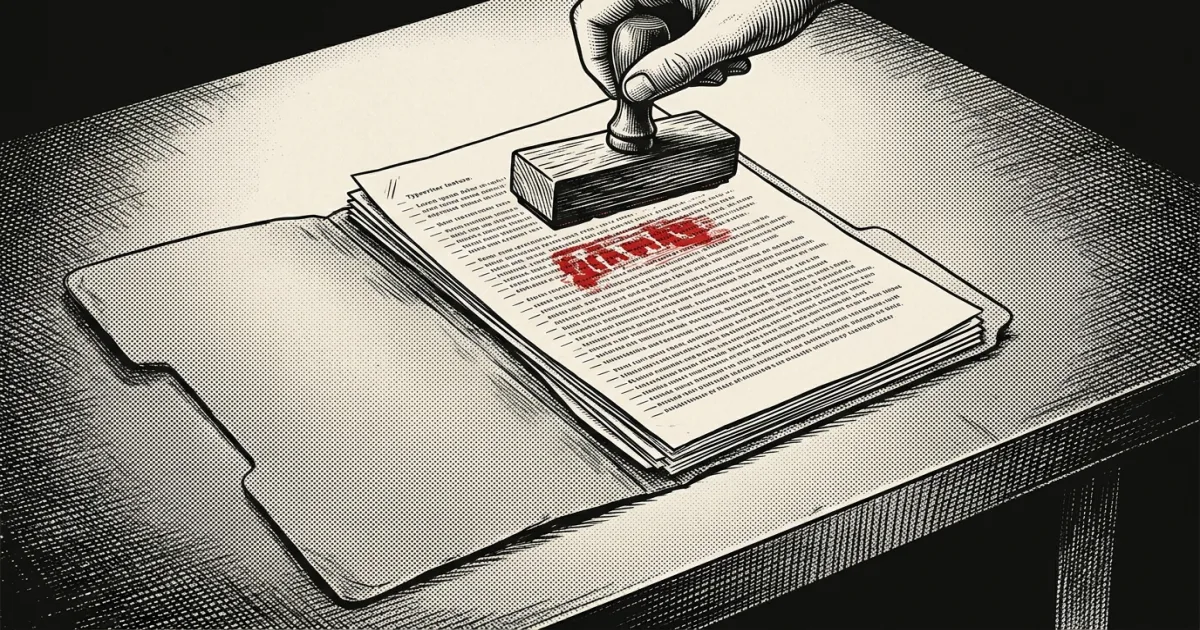
TL;DR: The FBI pushed the Majestic-12 memo up the chain in 1991, the Air Force sent back the word bogus, and the National Archives went hunting for the dull supporting paper a real secret committee would have shed and found none of it. The forgery died on filing habits.
In October 1991 somebody walked into the FBI’s Salt Lake City field office carrying nine pages of American mythology.
The pages described a secret government group called Majestic-12, supposedly stood up by President Harry Truman to handle the wreckage, the bodies, and the national-security shitstorm left behind by a crashed alien spacecraft. The memo wore classification markings. It named serious men.
It had the clipped, bloodless voice of government paperwork, which is catnip for anybody who’s ever suspected the government keeps a second set of books.
The person who turned it in said they’d found it lying on the lobby floor. I read the Bureau’s file off the FBI’s own vault, which serves its ghosts as gray photocopies of photocopies, stamps bleeding at the edges, somebody’s ballpoint crawling up the margin. The most durable document in UFO culture entered a federal building the way a pizza coupon falls out of a Sunday paper.
That detail is why I can’t put the file down. I spent years inside a service that treats paper as a bodily function, a form for the form and a signature block for every breath, and what gets me here is the plumbing. The forger had the tone cold and never once thought about routing slips.
Salt Lake City, October 13, 1991
Two FBI offices had already received versions of this material in 1988, and according to the Bureau’s own summary the Air Force determined back then that it was fake.
The 1991 round is better because the paperwork shows the machine grinding in real time. An individual contacted the duty agent on October 13 and said the document had been found on the lobby floor. Salt Lake City wrote the pages and their markings off as a hoax, and then somebody noticed that parts of the thing looked enough like Defense Department material to make ignoring it uncomfortable.
Nobody in that building gave a damn about saucers. They cared about whose ass would burn if the markings turned out to be real, so the file went up the chain, and up, until it landed on a desk with enough rank to say a word out loud.
Fake-looking paper can still hold real secrets
Forged classified material can carry genuine classified information inside it, which is why the field office asked headquarters for help establishing the document’s origin and whether any part of it was authentic.
The file has none of the cinematic pleasure people bolt onto UFO investigations. No dark sedan idles outside a motel. The closest thing to a trembling colonel in these pages is a signature block.
There are routing slips, requests, stamps, and a great deal of fussing over document control by men whose assigned subject that week was dead aliens.
The Air Force Office of Special Investigations checked the memo, and the answer came back in the language the federal government uses to dispose of a broken chair: bogus, case should be closed.
An FBI employee added a small knife twist on the way out. One section of the memo carried the date October 31. Halloween.
The note said the coincidence was interesting, though an April 1 date would have been worse. Somewhere inside that Bureau a person investigating the alleged custodians of dead extraterrestrials stopped long enough to make an April Fools’ joke in an open case file, and I love the son of a bitch for it.
The Archives went looking for the boring paper
Researchers combed records from the Air Force, the Joint Chiefs of Staff, the National Security Council, and the Truman and Eisenhower administrations, and came back with nothing except one questionable memo involving presidential adviser Robert Cutler.
That memo has its own collection of sores. The marking doesn’t fit Eisenhower-era practice and the paper lacks the expected letterhead or watermark.
The NSC’s meeting records show no sign of the meeting it describes, and Cutler was overseas when he supposedly wrote the thing.
Government creates paper the way a swamp creates mosquitoes. A secret operation can hide its purpose and still throw off calendars, travel vouchers, routing habits, filing codes, payroll, carbon copies, and clerks who want the margins correct, and that dull sediment is the layer no forger has the patience to build.
Majestic-12 asked us to believe in a vast federal organism that shed one thrilling artifact and none of the connective tissue an organism needs to stay alive. That missing tissue is where the fake bled out.
Keep your own records long enough and you learn the same lesson from the other end, that the boring copies are the ones that save you when somebody with a title decides your version of events is inconvenient.
A mystery with an org chart
A fake can feed a real hunger, and this one won’t die. It gives shape to the suspicion that institutions bury whatever might embarrass them, and I’ve been inside enough of them to know concealment runs on Tuesdays, cheap and boring and pointed at somebody’s job. No saucers required.
Every platform you build on runs a version of the same play. The document also offers something better than a light in the sky. Names, signatures, ranks, dates, a committee.
The mystery came with an org chart, and you can argue over typewriter fonts and security markings for the rest of your natural life, which beats standing in a field waiting on another saucer.
A forger in the eighties needed a typewriter, letterhead, a working knowledge of classification practice, and enough nerve to hand the thing to a federal agent. The tone costs nothing now, and the plumbing is still the hard part.
Calling the memo fake settles a narrow question. The famous paperwork offered as proof of Majestic-12 couldn’t survive contact with the paperwork around it, and whether anybody has seen something strange in the sky is a separate fight this file doesn’t touch.
That narrow answer irritates both camps, and I’ve got no patience for either of them. The believer wants the door propped open forever. The professional debunker wants every odd light nailed to a weather balloon before supper, and the file sits there and refuses to hand either one the win.
Somebody sat at a typewriter and picked the markings, the names, and October 31 for the date, then walked off and left the pages to do decades of work without him. I’ve read the whole file and the author isn’t in there. Who was he writing this for?
Sources
- FBI Vault: Majestic-12 file
- FBI Records: The Vault, Majestic-12
- National Archives: Records of Project Blue Book and the Majestic-12 memo
Frequently asked questions
Did the FBI prove that Majestic-12 existed?
No. The Bureau had the Air Force examine the document it held, got a determination of bogus, and closed the case. The National Archives turned up no supporting government record trail.
Was the Majestic-12 memo found on an FBI lobby floor?
That’s what the person who delivered the 1991 Salt Lake City copy told the duty agent, according to the case notes. Other copies of the material were already circulating before that.
Does a fake Majestic-12 memo disprove every UFO report?
No. It discredits that one document as evidence of a secret committee, and it leaves every other military and civilian sighting report where it was.
Comments are open to members. Sign up free →